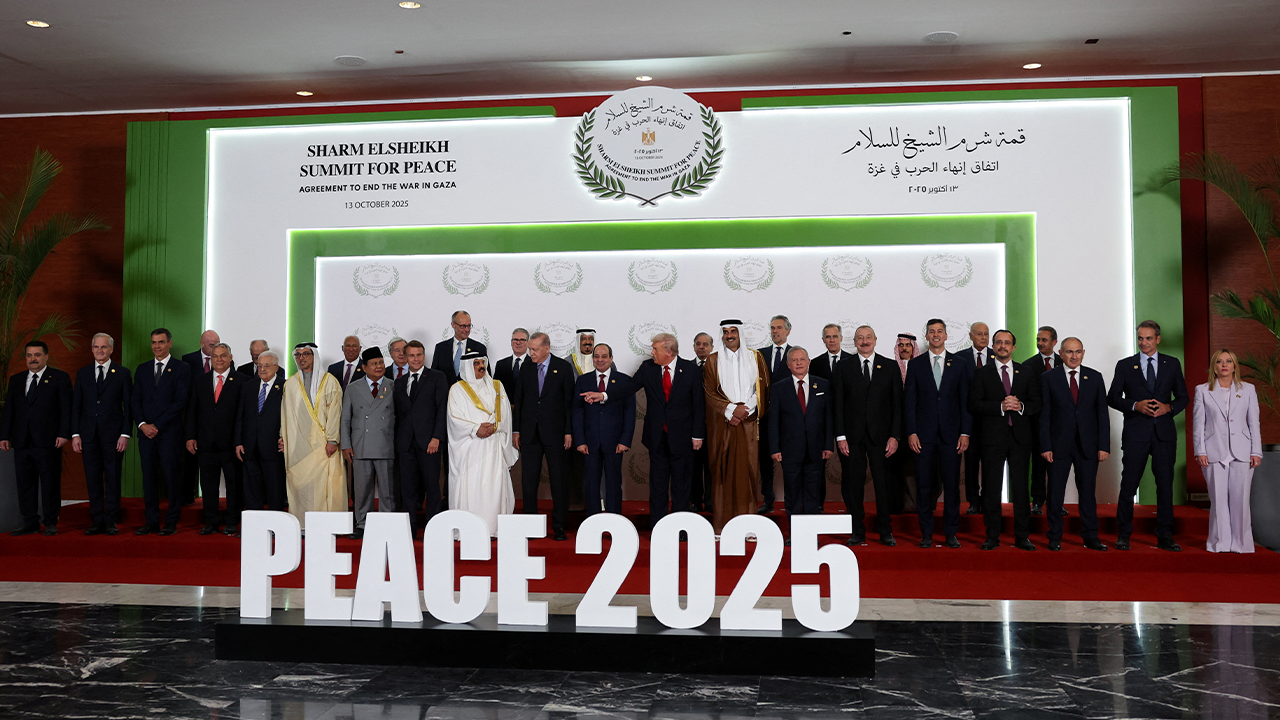
2025 Highlights Continued U.S. Influence in Middle East Amid Ceasefire and Regional Shifts
Analysts note that 2025 demonstrated a continuing and expanding U.S. footprint in the Middle East, with American leadership and force reshaping Gaza, Syria, and Iran rather than withdrawing from the region.
A Trump-brokered ceasefire ended the Gaza war and resulted in the return of all living Israeli hostages, although Ran Gvili’s body remains in Hamas hands. Seven hostages had been freed by March 7, 2025. The ceasefire deal involved exchanging Palestinian terrorists held in Israeli prisons for hostages, facilitated through regional coordination by Qatar and Turkey along with high-level U.S. involvement, including meetings with Steve Witkoff and Jared Kushner.
Though fragile, the ceasefire remains in place, with the United States overseeing the next phase of Gaza's postwar peace efforts from a coordination base in Israel.
Military actions throughout the year, including Operation Rising Lion – a 12-day war – Israeli strikes on Iranian infrastructure, and a U.S. strike targeting Iran’s nuclear program, underscore deep U.S.–Israel coordination.
On December 8, 2024, the defeat of Hezbollah and the collapse of the Assad regime marked a significant regional shift. These developments helped boost early momentum for the Abraham Accords and fostered closer ties with Saudi Arabia, Qatar, and the UAE.
Iran faces considerable uncertainty following its proxies' defeats. Questions remain about its ability to rebuild alliances and sustain its nuclear program amid potential domestic instability and renewed international pressure expected in 2026.