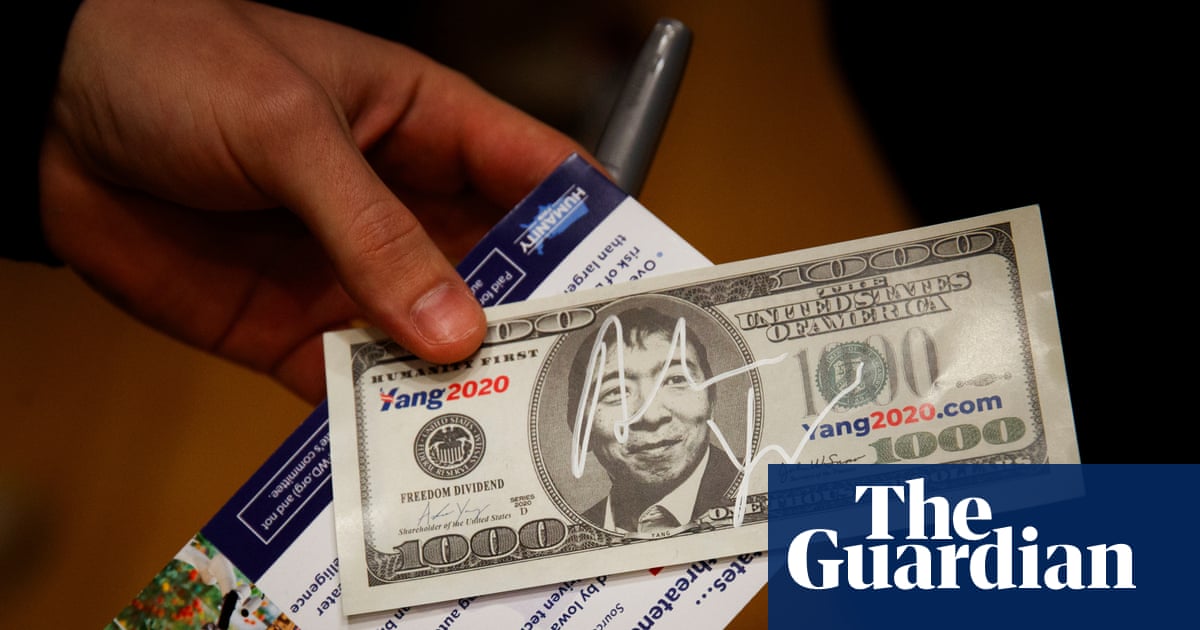
Andrew Yang Revives Universal Basic Income in Response to AI Displacement
Andrew Yang is advocating for a revival of universal basic income (UBI) as a response to job displacement caused by artificial intelligence. He promotes a $1,000-per-month Freedom Dividend for every adult, using AI tools like ChatGPT to support this proposal.
However, analysis of the idea argues that UBI does not address the fundamental challenges of an AI-driven economy, where automation may significantly reduce or even eliminate the need for human labor. For example, a two-parent, two-child family subsisting on $1,000 per month would be roughly 25% below the poverty line.
Yang suggests funding such a program through a value-added tax (VAT), a type of consumption tax widely used in Europe but not currently implemented in the United States. At a $53,000-per-year level per adult, the program would cost over $14 trillion annually—approximately 45% of the US GDP.
In a future where machines produce goods and services cheaply, taxes may need to be targeted toward capital or robot owners rather than workers. Potential options include taxes on carbon, land, or other externalities.
Economist Erik Brynjolfsson warns that the outcomes of an AI-powered economy will largely depend on who controls the technology, raising concerns about the concentration of power.
While UBI reduces work requirements, it does not tackle structural inequality. A stronger wage subsidy, such as an enhanced Earned Income Tax Credit, may be more effective under current conditions.
The piece also observes that many wealthy countries rely on robust social safety nets instead of UBI. Examples include Australia, Denmark, Spain, France, and Italy, where people tend to work fewer hours but do not have universal basic income programs.