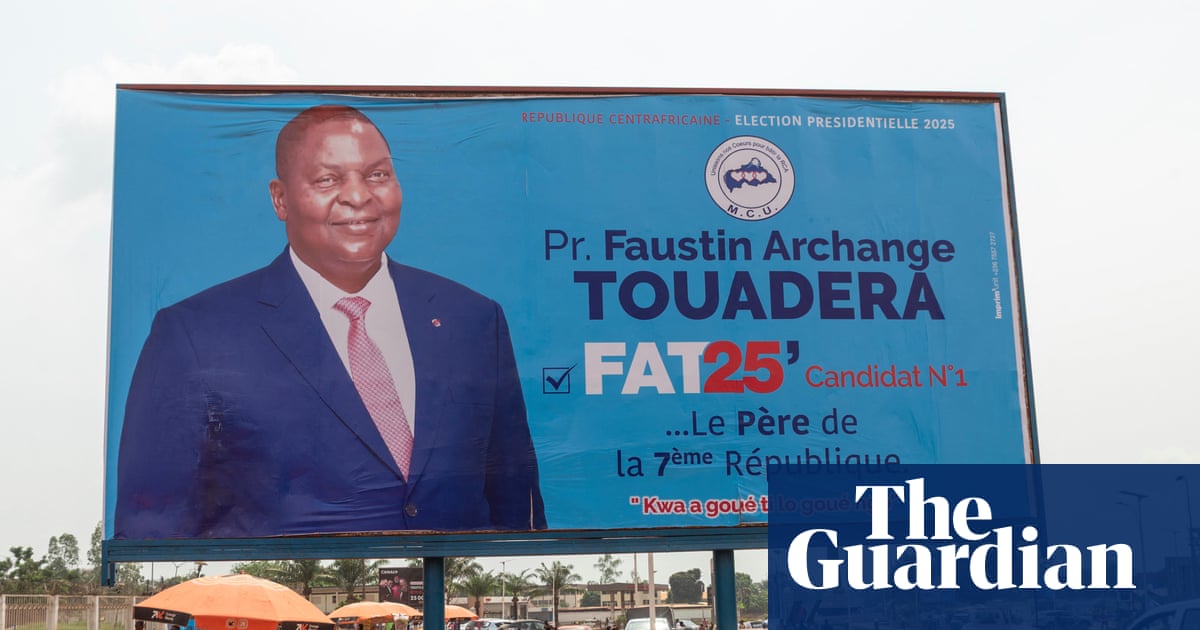
Central African Republic Holds Quadruple Elections as President Seeks Third Term
On 28 December 2025, the Central African Republic held a quadruple election covering the presidency, parliament, local, and municipal offices with around 2.3 million registered voters.
President Faustin-Archange Touadéra sought a third term, having been in power since 2016 after serving as a mathematics professor and prime minister from 2008 to 2013. A 2023 referendum abolished term limits and extended presidential mandates from five to seven years.
Seven candidates appeared on the presidential ballot, including notable contenders Anicet Georges Dologuélé, runner-up in the 2015 and 2020 elections, and Henri-Marie Dondra, a former prime minister, both of whom were initially banned but later cleared by the constitutional court.
The opposition sought to capitalize on public frustration amid ongoing conflict, with over 500,000 people internally displaced and a similar number taking refuge in neighboring countries.
The United Nations peacekeeping mission (MINUSCA) and the UN regional office (Unoca) indicated that while progress towards peace was tangible, significant challenges remain. The UN mission’s mandate has been renewed through the following year.
Security concerns persist with Wagner mercenaries operating in the country since 2018, influencing the security landscape. Although Touadéra resisted integrating them into the Africa Corps, Rwanda has adopted an approach focused on smaller business interests within the Central African Republic.
There have been concerns over election integrity, particularly regarding reportedly online-only voter lists in a context of limited internet and electricity access, raising fears of voter disenfranchisement and the possibility of an opposition boycott.
Additionally, an August report claimed that the government evicted soldiers to enable Rwandan troops to pursue a large livestock farming operation near Bangui.