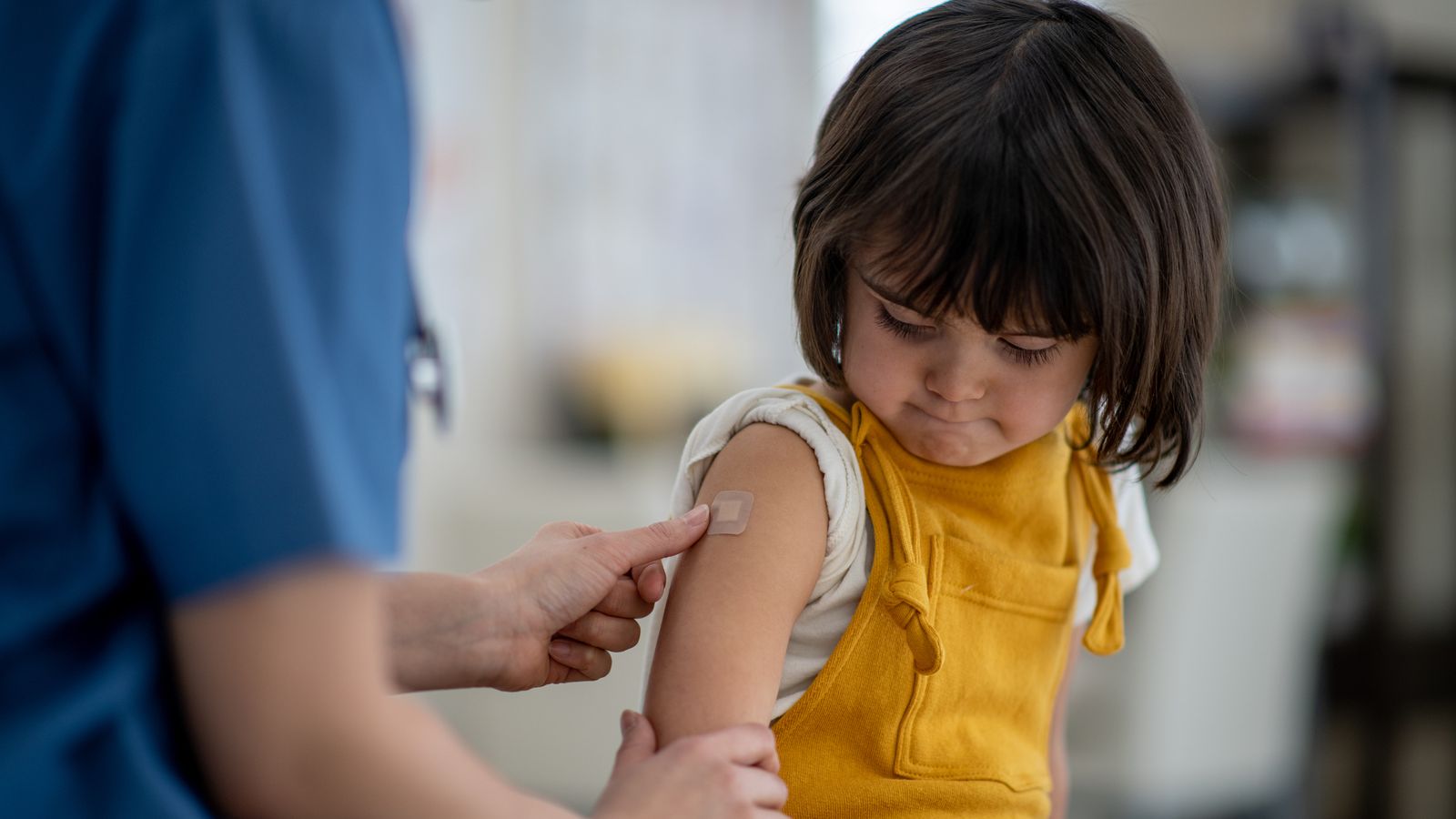
Children from Struggling Families to Be Vaccinated at Home as Immunisation Rates Drop
No childhood vaccine in England met the 95% target in 2024, the World Health Organization's goal for herd immunity. To address this, a £2 million pilot program will vaccinate children at home through health visitors during routine visits, focusing on families facing barriers to care such as not being signed up with a GP, travel costs, childcare, and language challenges.
Twelve pilot schemes will run from mid-January across various regions including London, the Midlands, North-East England, Yorkshire, the North West, and the South West. Children will receive the MMRV vaccine, which covers measles, mumps, rubella, and chickenpox, replacing the current MMR vaccine. The chickenpox vaccination component will start from 2 January as part of a year-long trial.
Health Secretary Wes Streeting emphasized that the approach uses trusted health visitors to improve protection against preventable diseases. He clarified that this scheme is not a replacement for GP vaccinations and families should still vaccinate their children at local surgeries. Health visitors involved will receive additional training to effectively engage parents who may be hesitant to vaccinate.
Struggling families will be identified through NHS systems using GP records, health visitor notes, and local databases. Latest uptake data from 2024/25 reveal that 91.9% of five-year-olds had received one dose of MMR, 83.7% received two doses, the first MMR dose at 24 months reached 88.9%, Hib/MenC vaccination coverage was 88.9%, and the four-in-one preschool booster was at 81.4%.