China's Missile Surge Challenges U.S. Bases Across the Pacific
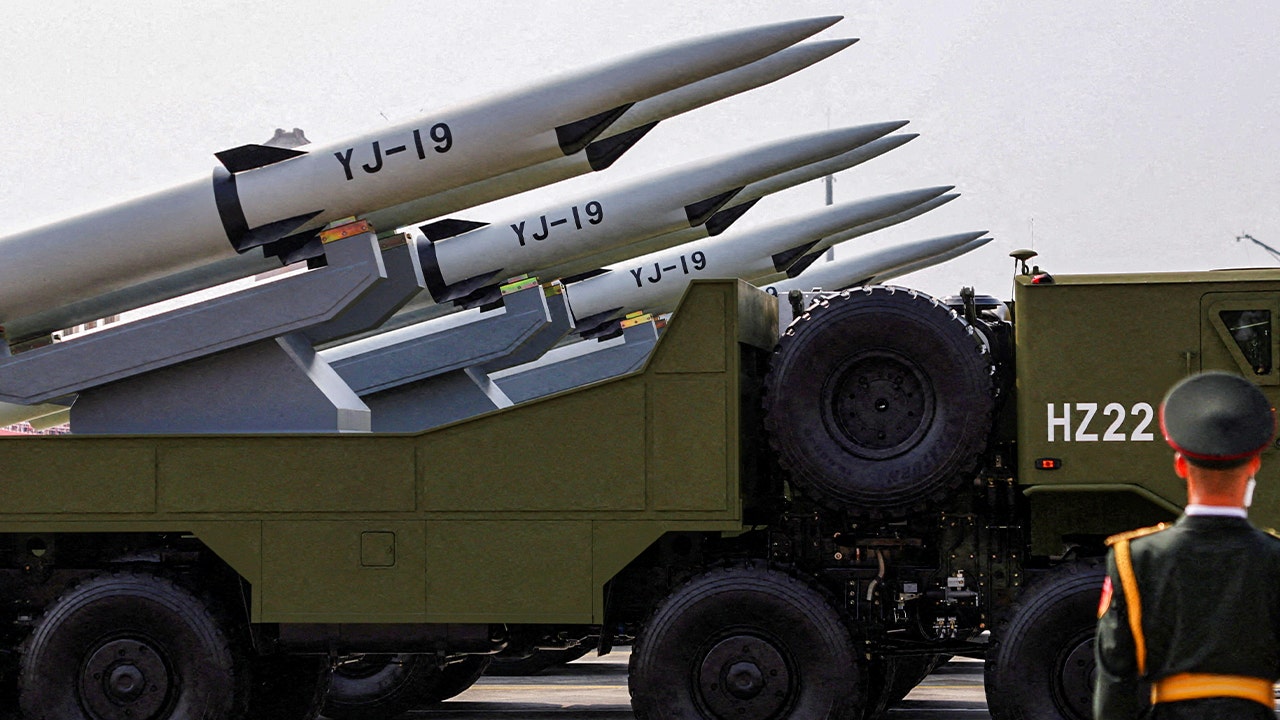
China's People's Liberation Army (PLA) Rocket Force has developed the world's largest theater-range missile inventory, featuring short-, medium-, and long-range missiles, underground facilities, and mobile launchers designed to deter U.S. bases in the Western Pacific.
These missiles can reach across the first island chain and increasingly into the second island chain, enabling massed, ground-based fire to threaten airfields, ports, and military installations throughout the region.
In response, the United States maintains advantages in targeting networks and multi-domain integration, including satellites, undersea sensors, stealth drones, and joint command tools, capabilities that China has not yet demonstrated fully.
China has not engaged in war since the 1970s, and coordination across its military services remains challenging due to a dual command–political commissar structure.
Additionally, China's largely state-owned defense industry faces inefficiencies, quality problems, and maintenance challenges, which affect its operational readiness.
The U.S. stocks of long-range munitions, however, could be depleted after roughly a week in a Taiwan-style conflict, prompting the United States to scale up its ground-based missile forces and fires with systems such as Typhon launchers, HIMARS-like batteries, precision missiles, and long-range hypersonic weapons.
By 2035, around 15,000 long-range anti-ship missiles are planned, a significant increase from approximately 2,500 today.
China's missile-centric strategy aims to overwhelm U.S. bases early in a conflict, while the U.S. relies on layered defenses including Patriot, THAAD, Aegis missile systems, and submarines capable of stealthy launches.
Alliances play a critical role; the United States benefits from partners in Japan, the Philippines, Australia, and South Korea for basing, intelligence sharing, and logistics support, whereas China lacks a comparable network.
The decisive competition focuses on shoot-relocate-sustainability capabilities and geographic access, making basing access and host-nation agreements vital factors that can influence escalation risks.