Experts Draw Lessons from Authoritarian Regimes Following Trump's Re-election
Activists Stefania Kapronczay from Hungary, Ece Temelkuran from Turkey, and Claudia Ortiz from El Salvador discuss their experiences with authoritarianism to inform the US following Trump's re-election. They warn that autocratic power can consolidate rapidly once institutions are captured and the private sector complies, citing Hungary's trajectory and the EU's labeling of Hungary as a hybrid regime.
Kapronczay highlights Hungary's 2010 constitutional changes, which led to control over judiciary, media, NGOs, and universities, building an autocratic framework. She argues that opposition messaging should focus on everyday pocketbook concerns rather than abstract democratic ideals to achieve broad support. Protests remain important, but broader, local coalitions are key.
Temelkuran cautions against an "us vs. them" mindset in the US and emphasizes that defending democracy is a long, grinding process requiring persistence and a blend of street activism with formal politics. She points to Turkey's experience under Erdoğan, where power consolidation intensified after his second term, opponents were jailed, and protests restricted. However, recent Istanbul protests suggest a potential shift toward integrating street activism with traditional party politics.
Ortiz stresses keeping the people at the center of the narrative in El Salvador by listening to citizens and delivering functioning institutions. She notes that Bukele's emergency powers and loyalist appointments have resulted in rights abuses, high incarceration rates, and deteriorating basic services. Despite this, his popularity remains high due to crime reductions and effective propaganda.
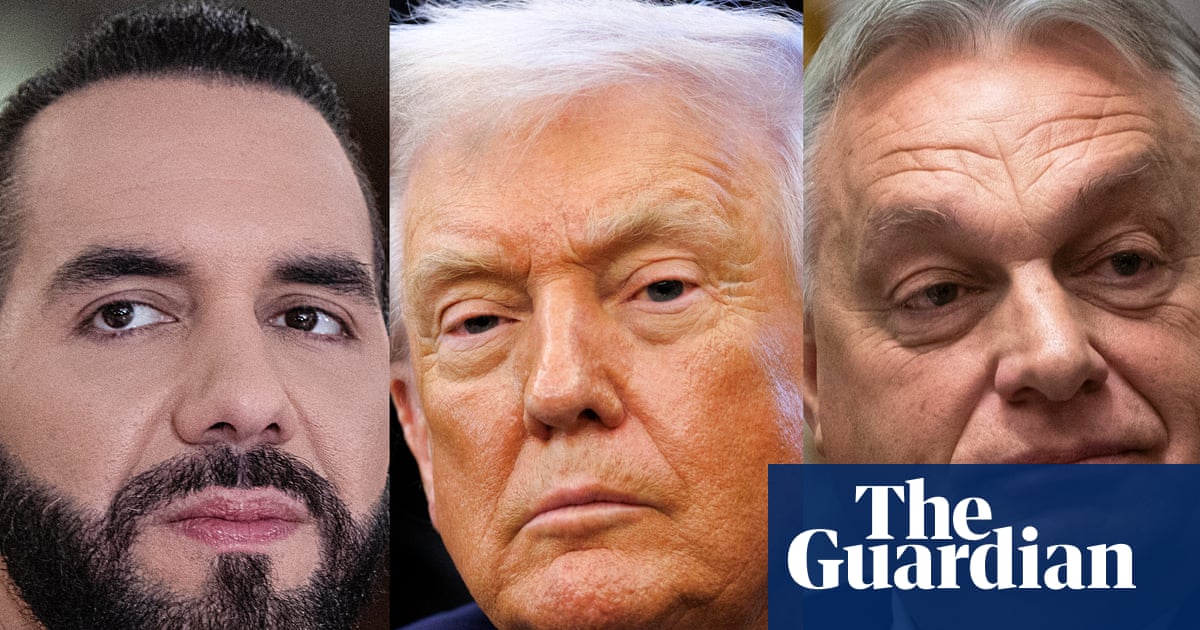
The article also notes Trump's admiration for Hungary's Orbán and El Salvador's Bukele, as well as a deal to send detained migrants to a Salvadoran prison, illustrating how US policy aligns with authoritarian models.