Fears Grow of AI Bubble Amid High Spending and Market Concerns
Sky News analyzes whether the AI boom could be a bubble and outlines three pressure points that could burst it as of December 22, 2025.
Despite high expectations for AI growth, some AI-related stocks have fallen since mid-2025. The US stock market remains heavily exposed to AI, with 41 AI stocks accounting for 75% of S&P 500 returns, and the 'magnificent seven' companies driving about 37% of the index’s performance.
Industry leaders publicly deny that the current state represents a bubble; Nvidia CEO Jensen Huang states the situation is far from a bubble.
However, analysts warn that a bubble burst could have systemic effects, including illiquid banks and potential taxpayer bailouts in a worst-case scenario, as noted by Gary Marcus.
AI spending projections are enormous: Microsoft, Amazon, Google, Meta, and Oracle could spend about $1 trillion on AI by 2026, while OpenAI is projected to spend around $1.4 trillion over three years, with 2025 profits estimated at about $20 billion, which would not be sufficient to cover such spending.
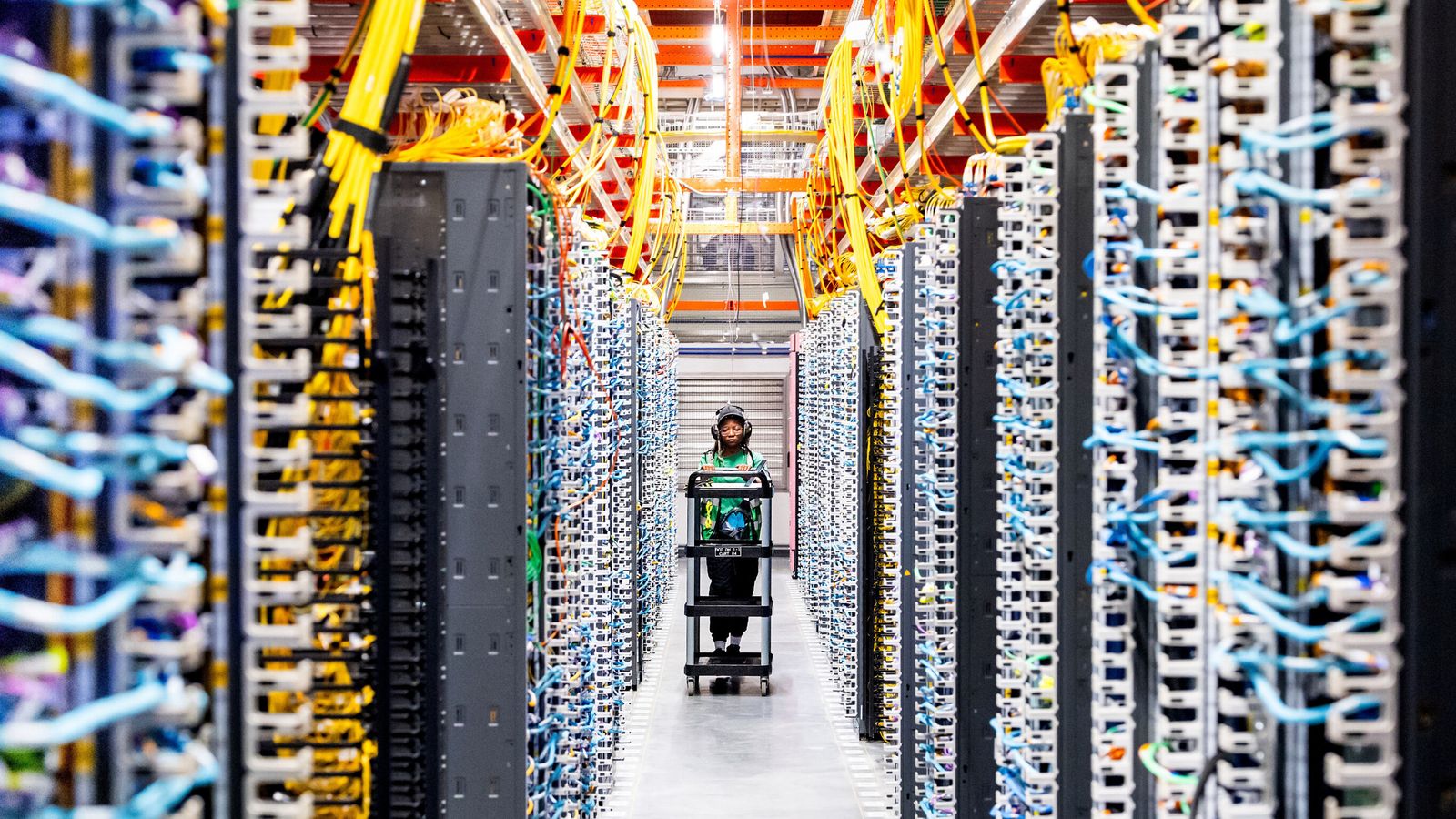
The AI growth model relies on massive data-centre expansion, exemplified by projects like Stargate in Texas and Meta’s Hyperion in Louisiana, which highlight scale and power-grid constraints for AI infrastructure.
Depreciation risks for AI hardware are substantial: if chips lose their edge every three years, up to $780 billion could be wiped from big-tech value; at a two-year depreciation cycle, this value could reach up to $1.6 trillion. By 2030, about $2 trillion in profit might be needed to justify AI-related costs.
Business adoption of AI remains modest: OpenAI reportedly has about 800 million weekly active users with only around 5% paying users. Early 2025 Census data showed 8–12% of companies using AI for goods or services, rising to 14% in June but slipping back to 12% recently; most firms remain in pilot phases or exploring scaling.
Large language models (LLMs) demonstrate scaling-driven improvements but struggle with real-world tasks that require deeper world understanding. They lack long-term memory, and experts question the premise that mere scaling will yield transformative profits.