Fears Grow of AI Bubble Amid High Spending and Profitability Concerns
The AI market continues to be dominated by a small group of stocks, with 41 AI-related companies responsible for 75% of the S&P 500's returns, and the so-called "magnificent seven" accounting for approximately 37% of the index's performance. Major technology companies including Microsoft, Amazon, Google, Meta, and Oracle are projected to invest around $1 trillion in artificial intelligence by 2026. Meanwhile, OpenAI is estimated to spend about $1.4 trillion over three years, with its profit forecasted at roughly $20 billion in 2025.
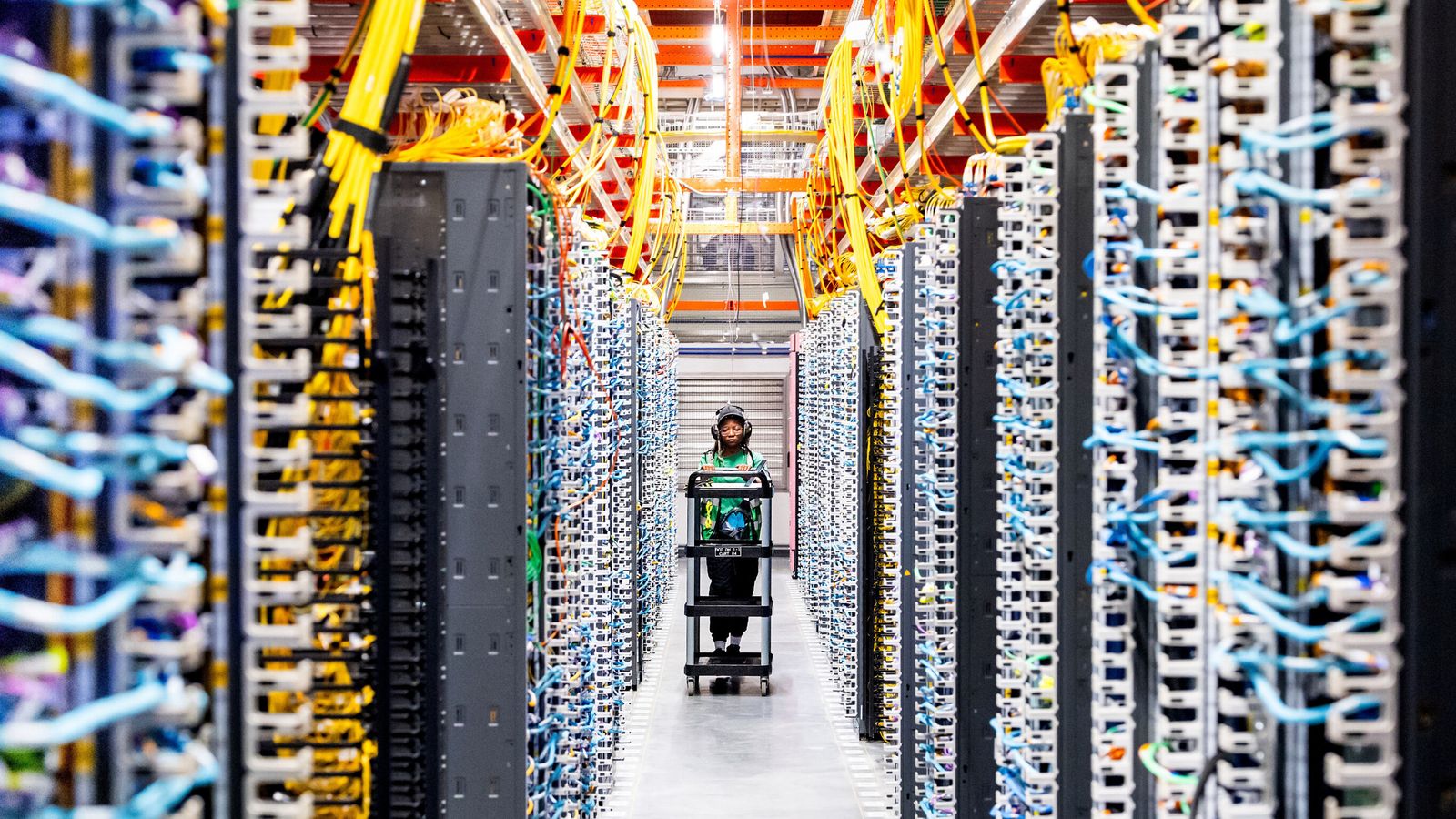
Despite this massive spending, questions remain regarding the economics of AI deployment. Current profits have yet to keep pace with the level of investment, leading to investor concerns about the sustainability of the AI boom. Data center expansions are underway, such as Stargate in Texas and Meta's Hyperion in Louisiana, which require enormous power, placing stress on electrical grids. Some companies are building their own power infrastructure to meet these demands.
The risk of asset depreciation poses another challenge. If AI chips lose their competitive edge every three years, the value of big tech companies could decline by approximately $780 billion, and this figure could rise to around $1.6 trillion if the depreciation period shortens to two years. To justify these costs, profits would need to reach roughly $2 trillion by 2030.
Adoption versus monetization presents further complexity. OpenAI reportedly has about 800 million weekly active users, but only around five percent are paying customers. Usage of AI among U.S. firms has fluctuated, with 8-12% employing AI for outputs in early 2025, increasing to 14% in June before drifting back to 12%. The majority of firms remain in pilot or scaling phases, according to McKinsey.
Large language models (LLMs) exhibit improvements as computing power scales, but their performance on real-world tasks grows more slowly. These models rely heavily on statistical predictions, lack long-term memory, and can misapply data, leading experts to express skepticism that simply increasing scale by 100 times will resolve all issues.
Opinions among experts diverge. Some warn of a potential economic shock if the AI bubble bursts, while industry leaders such as Nvidia's Jensen Huang argue that a crash is unlikely. Others emphasize the uncertain return on investment and the ongoing necessity for research and development in this rapidly evolving field.