Fears Grow of AI Bubble and Key Pressure Points That Could Burst It
The AI boom has raised concerns about a potential bubble, with analysis identifying three main pressure points that could trigger a collapse. Since mid-2025, the market value of AI-linked companies like Nvidia, Oracle, and Coreweave has fallen, although the US stock market remains heavily influenced by AI investments. Forty-one AI stocks account for 75% of S&P 500 returns, while the so-called 'magnified seven'—Nvidia, Microsoft, Amazon, Google, Meta, Apple, and Tesla—contribute to 37% of the S&P 500's performance.
Nvidia CEO Jensen Huang has stated that a bubble is not imminent, but some analysts express caution over the market's reliance on a single AI trajectory. Should a bubble burst, broad financial distress could follow, potentially impacting funds and taxpayers if banks become illiquid. However, some argue that a crash could be managed if AI growth continues to be a significant economic factor.
Projected AI spending is substantial, with Microsoft, Amazon, Google, Meta, and Oracle expected to invest around $1 trillion by 2026. OpenAI has committed approximately $1.4 trillion over the next three years, despite profit expectations for 2025 being about $20 billion—far below what would be needed to maintain such expenditures.
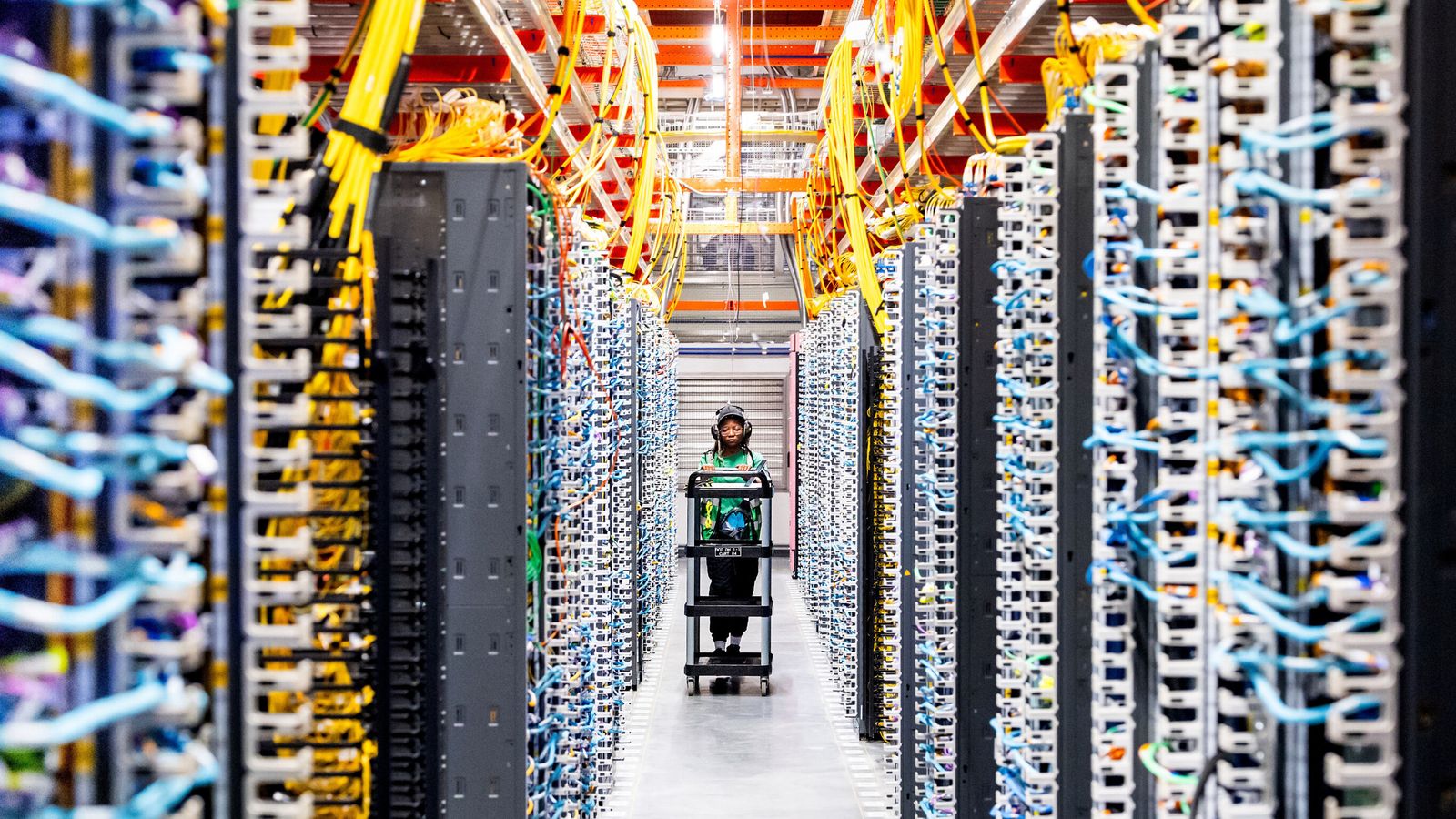
Mega-data center projects exemplify this scale of investment: the Stargate data center in central Texas is anticipated to cover an area the size of Manhattan’s Central Park by mid-2026, while Meta’s Hyperion data center in Louisiana is also comparable in size and power consumption to Manhattan.
Risks include depreciation and hardware refresh cycles; AI chips may require replacement every three years or less. Economists warn that a three-year depreciation cycle could reduce big-tech market value by approximately $780 billion, with a two-year cycle potentially doubling that to $1.6 trillion. By 2030, around $2 trillion in profits might be required to justify AI-related costs.
Adoption and monetization indicators remain mixed. OpenAI reportedly has about 800 million weekly active users, though only around 5% are paying customers. Early 2025 data showed 8-12% of companies using AI, rising to 12-14% among larger firms by June, but this figure has recently declined. McKinsey notes that most enterprises are still in pilot phases of AI integration.