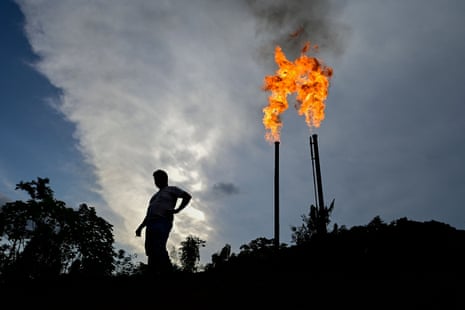
Fossil Fuel Projects Threaten Health of Over 2 Billion People Worldwide
A quarter of the world’s population, more than 2 billion people, live within 3 miles of operational fossil fuel projects, raising serious health concerns. There are approximately 18,300 oil, gas, and coal sites operating across 170 countries, with around 3,500 new sites proposed or under development that could expose an additional 135 million people.
Within 1 kilometer of these fossil fuel sites, 463 million people reside, including 124 million children. One third of these operational sites overlap with critical ecosystems like wetlands, forests, and rivers, threatening biodiversity and carbon sequestration.
Proximity to drilling operations, processing plants, and pipelines increases risks of cancer, respiratory and heart diseases, premature birth and death, while degrading air quality, water quality, and land. Many active projects create pollution hotspots and 'sacrifice zones' where low-income and marginalized communities disproportionately bear the health and environmental burdens.
Indigenous peoples, who constitute about 5% of the global population, are disproportionately affected, with one in six sites located on Indigenous territories. The report includes testimonies from Indigenous land defenders in countries such as Canada, Brazil, Senegal, Colombia, and Ecuador.
The findings are based on mapping conducted by the Better Planet Laboratory at the University of Colorado Boulder. The researchers note that the true global impact may be even greater due to data gaps and incomplete census information.
At COP30 in Belém, Brazil, there were strong calls for a full, fast, fair, and funded phase-out of fossil fuels alongside a just transition. The report highlights extensive fossil fuel industry lobbying at UN climate talks, with about 5,350 lobbyists recorded over four years, and reveals that all US LNG terminals have violated pollution limits.