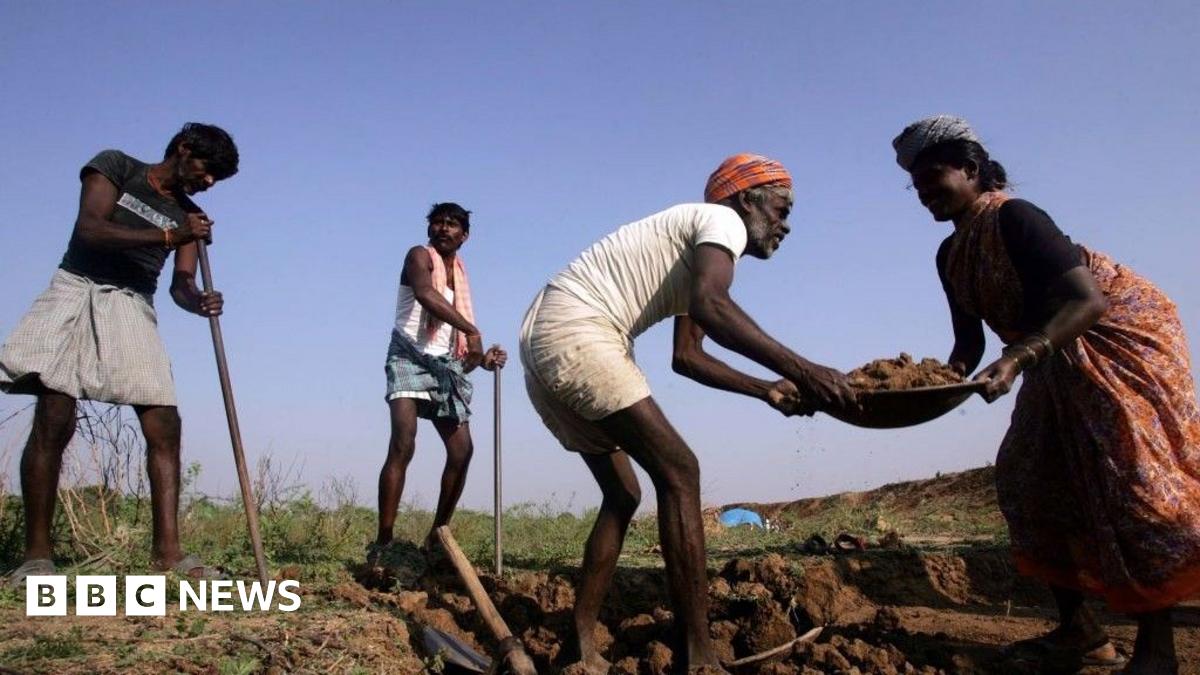
India’s Rural Employment Guarantee Scheme: Evolution, Impact, and Concerns
Launched in 2005, the National Rural Employment Guarantee Scheme (NREGS) guaranteed up to 100 days of paid manual work per rural household. It was renamed the Mahatma Gandhi National Rural Employment Guarantee Act (MGNREGA) in 2009 in honor of Mahatma Gandhi, though the name is being dropped under the new law.
Approximately 65% of India’s 1.4 billion population live in rural areas where farming income, accounting for about 16% of GDP, is often insufficient. The scheme has become a crucial support for rural livelihoods and acts as a buffer during economic shocks.
Covering around 126 million workers, the program includes more than half women and roughly 40% from Scheduled Castes or Tribes. It has played an important role during crises such as the Covid pandemic by sustaining rural demand. Economists credit it with boosting rural consumption, reducing poverty, and increasing private-sector wages.
The new legislation raises the guaranteed workdays from 100 to 125 per rural household and retains the provision of an unemployment allowance if workers are not provided work within 15 days. Funding and administrative control will shift from a 90:10 central-to-state split to 60:40, although the central government continues to notify the scheme and direct allocations. States remain legally responsible for ensuring employment or unemployment allowances. The current year’s allocation is roughly $9.5 billion.
Critics warn that the funding caps and increased state share could dilute what had become a legal entitlement to work. An international petition led by Olivier De Schutter argues that dismantling or weakening the scheme would be a historic mistake.
Available evidence on the scheme’s impact is mixed. One study reports 14% higher earnings among beneficiaries and a 26% reduction in poverty, whereas LibTech India found only about 7% of rural households received the full 100 days in 2023-24. Administrative challenges cited include underfunding, wage payment delays, and uneven distribution of funds. Notably, Tamil Nadu and Kerala reportedly receive disproportionate shares of funds relative to their poverty levels, suggesting allocation inefficiencies and disparities in administration.
Critics also voice concern that reforms might centralize control, potentially stifling non-farm job growth, while supporters highlight efforts at modernization.