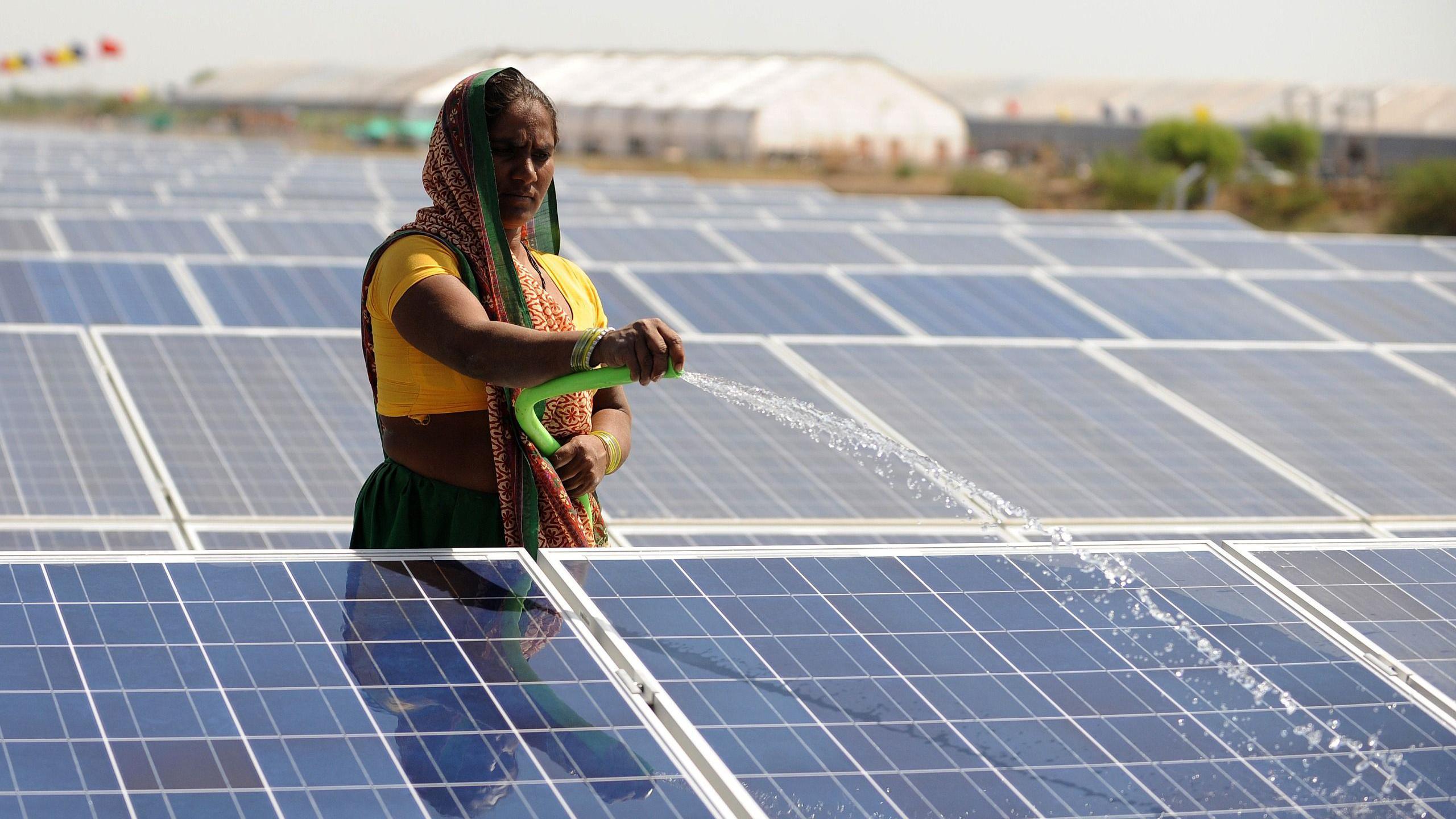
India's Solar Energy Growth and Emerging Solar Waste Management Challenges
India has become the world's third-largest solar energy producer in just over a decade, with solar power now contributing more than 20% of the country's installed capacity, while coal still accounts for over 50%. Nearly 2.4 million households have adopted solar energy under a subsidy scheme, highlighting widespread rooftop and solar park deployment.
Solar panels typically last about 25 years. However, India currently lacks a dedicated budget for solar-waste recycling and has only a few small processing facilities. There is no official data on solar waste, but estimates suggest about 100,000 tonnes had accumulated by 2023, increasing to 600,000 tonnes by 2030.
A study by the Council on Energy, Environment and Water (CEEW) projects that solar waste could exceed 11 million tonnes by 2047. Managing this will require approximately 300 dedicated recycling facilities and an investment of around $478 million over two decades.
Although the 2022 e-waste rules assign manufacturers responsibility for the end-of-life handling of solar panels, enforcement is uneven. Home and small-scale panels, which make up 5–10% of installations, remain difficult to track and recycle.
Globally, the United States could generate between 170,000 and 1 million tonnes of solar waste by 2030, and China nearly 1 million tonnes, while India is still developing a dedicated regulatory framework. Efficient recycling efforts in India could reclaim about 38% of materials for manufacturing new panels by 2047 and prevent around 37 million tonnes of carbon emissions associated with mining. Valuable metals such as silicon, silver, and copper can be recovered, whereas current processing mainly recovers glass and aluminium.