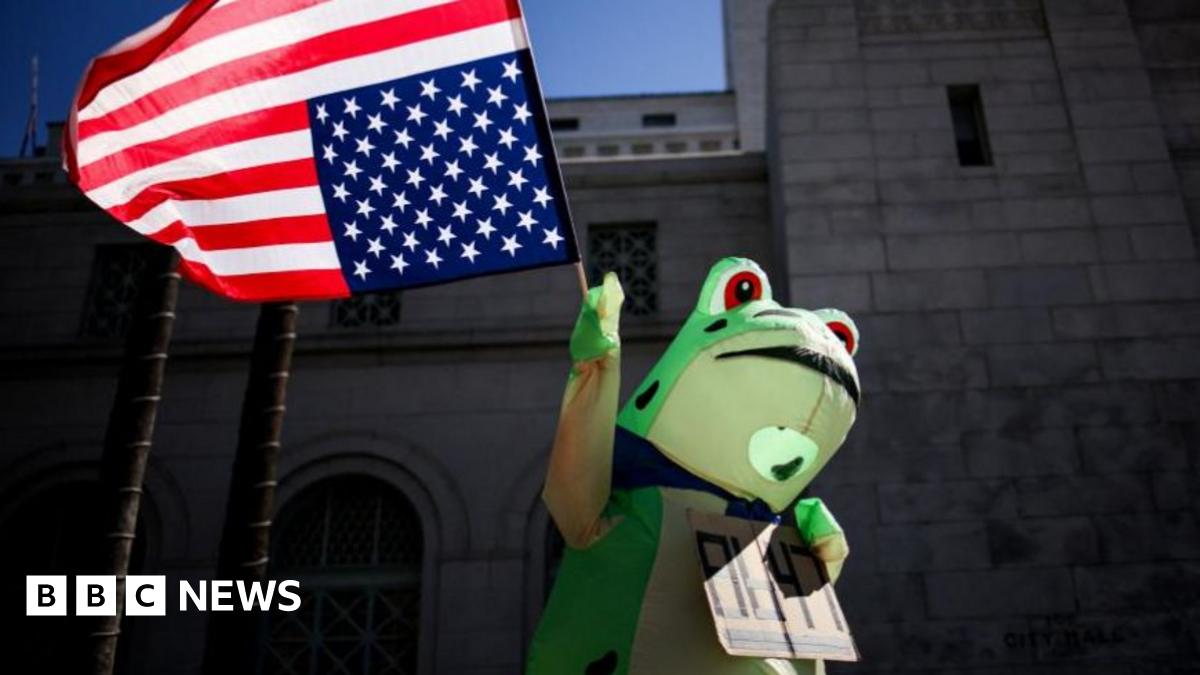
Inflatable Frog Costume Becomes Symbol of Protest and Political Messaging
A frog costume symbol emerged from a viral incident on 2 October 2020 in Portland, when a protester wearing an inflatable frog outfit was sprayed by an immigration enforcement officer near an ICE facility. This protest occurred following President Trump's order to deploy the National Guard to the area. The frog inspiration traces back to Pepe the Frog, a meme originally created by artist Matt Furie. While Pepe's creator has distanced himself from its use by right-wing groups, the character has undergone a complex history of reclamation and controversy.
Political scientist LM Bogad described this approach as tactical frivolity, whereby humorous and disarming imagery is employed to manage public perception and offer political cover to protesters. The frog motif quickly spread both nationwide across numerous U.S. cities at No Kings protests and internationally to locations such as Tokyo and London. Correspondingly, online demand for inflatable frog costumes surged, leading to Amazon backorders.
In Portland, organizers established Operation Inflation to supply inflatable frog outfits to protesters. Their intent was to shape the narrative away from violence and deflect accusations of mob behavior. Online, the frog has been dubbed the 'Antifa Frog,' reflecting its association with leftist anti-fascist movements despite the character's origins tied to the far right through Pepe the Frog.
This use of symbolic imagery aligns with broader examples of meme politics, including Otpor in Serbia, Winnie the Pooh symbolism in China, and the use of Pepe by Hong Kong pro-democracy protesters, demonstrating how such symbols can evolve beyond original intentions.
Regarding the National Guard deployment in Portland, court rulings played a significant role: an October decision allowed Trump's deployment of troops, but a subsequent ruling a month later blocked the deployment, and reports indicated that the troops eventually left the area.