Innovations in Flame Retardant Treatments for Wood and Plastics
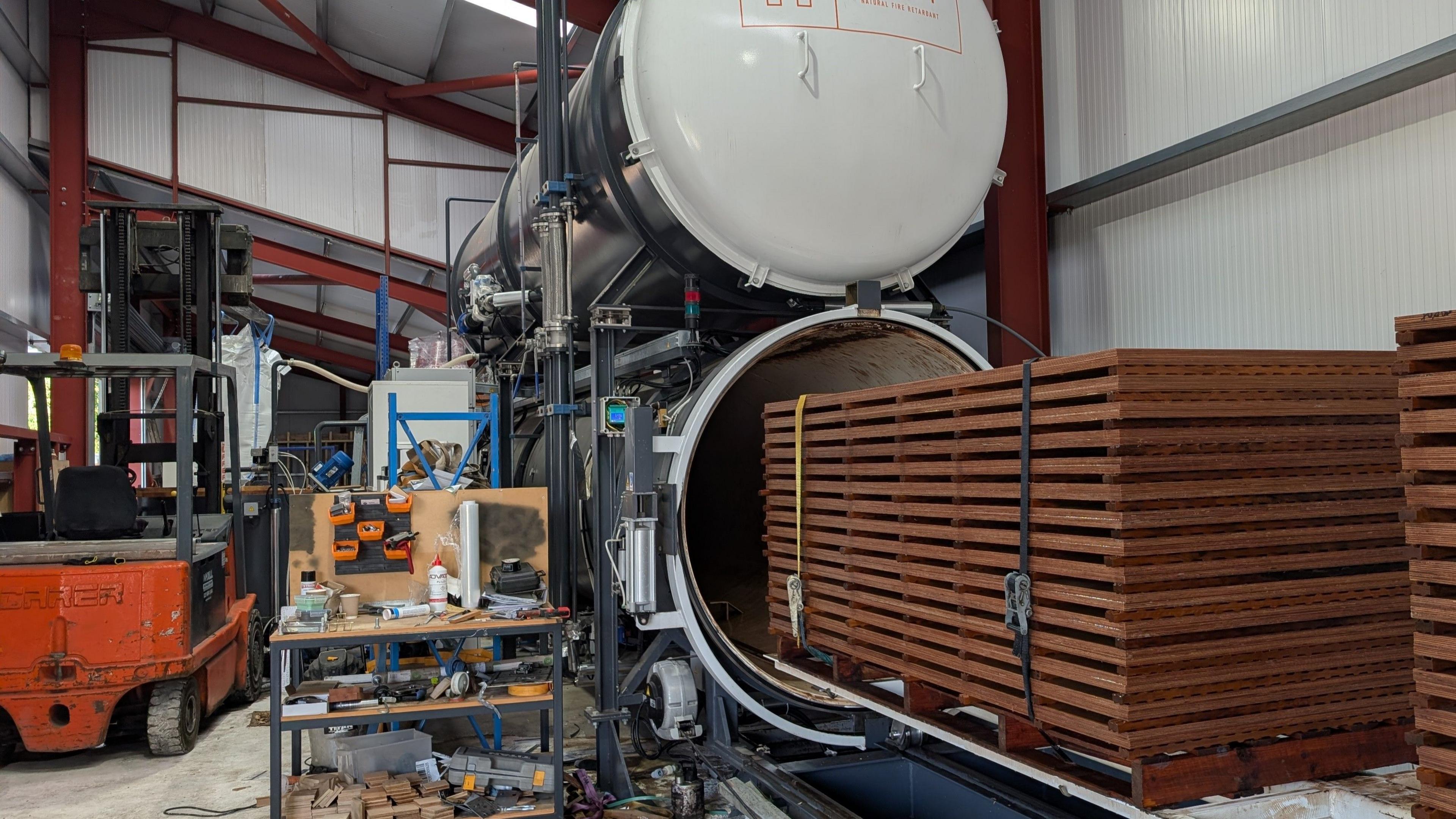
Burnblock is a flame retardant liquid treatment for wood developed by Halt, a company based in Belfast. This treatment forms a protective char on wood and releases water to absorb heat, thereby slowing the spread of fire. Halt has supplied Burnblock-treated wood to hundreds of locations across the UK and Ireland, including hoardings for the HS2 tunnel. The exact ingredients of Burnblock are not publicly disclosed by either Halt or Burnblock's company and CEO. However, documentation from the Danish Technological Institute suggests that components include a natural body component, citric acid, and a natural berry component.
The Burnblock treatment process involves using an autoclave where wood pores are first vacuumed open, then pressurized to push the flame retardant fluid into the core of the timber. This is followed by kiln drying for a period ranging from about 10 days to six weeks to ensure that the retardant becomes embedded in the wood.
Fire scientist Richard Hull has noted that while treatments can alter timber's burning behavior, he remains skeptical about new retardants, pointing out that some earlier innovations, such as clay nanocomposites from the early 2000s, largely failed to become widely adopted.
In addition to wood treatments, innovations in flame retardants are also being explored for plastics. For example, First Graphene's PureGRAPH additive is claimed to slow burning by creating a gas barrier and char layer. Vector Homes plans to license PureGRAPH technology for construction plastic pellets, which are said to have high burn-resistance, although there is not yet established data on potential health hazards.
There is a growing interest in external fire retardants for wildfire defense. Stanford's Eric Appel is researching gel-like retardants that can be sprayed on homes in advance of wildfires. These retardants may form protective aerogel structures when exposed to flame, offering a new method of protection.
The article also highlights historical concerns over the toxicity of 20th-century flame retardants, underscoring the need for safer and more effective replacements. Despite this need, investment in new flame retardant solutions has been limited historically.