Innovative Flame-Retardant Treatments for Timber and Plastics Enhance Fire Safety
Burnblock is a flame-retardant treatment designed for timber, demonstrating significant resistance to fire in tests. A demonstration video compares Burnblock-treated models with untreated or alternatively treated ones, showing superior performance against a torch. Halt, based in Belfast, supplies Burnblock-treated timber to hundreds of locations across the UK and Ireland, including the HS2 project, and notably, no fires have been reported in buildings treated with Burnblock to date.
The ingredients of Burnblock are not publicly disclosed by Halt or Burnblock; however, documents from the Danish Technological Institute mention components such as a natural body component and citric acid. Burnblock is said to act by forming a protective char layer on the wood, releasing water to absorb heat, and reducing oxygen availability to slow combustion. It can also be added to other materials like dried seagrass.
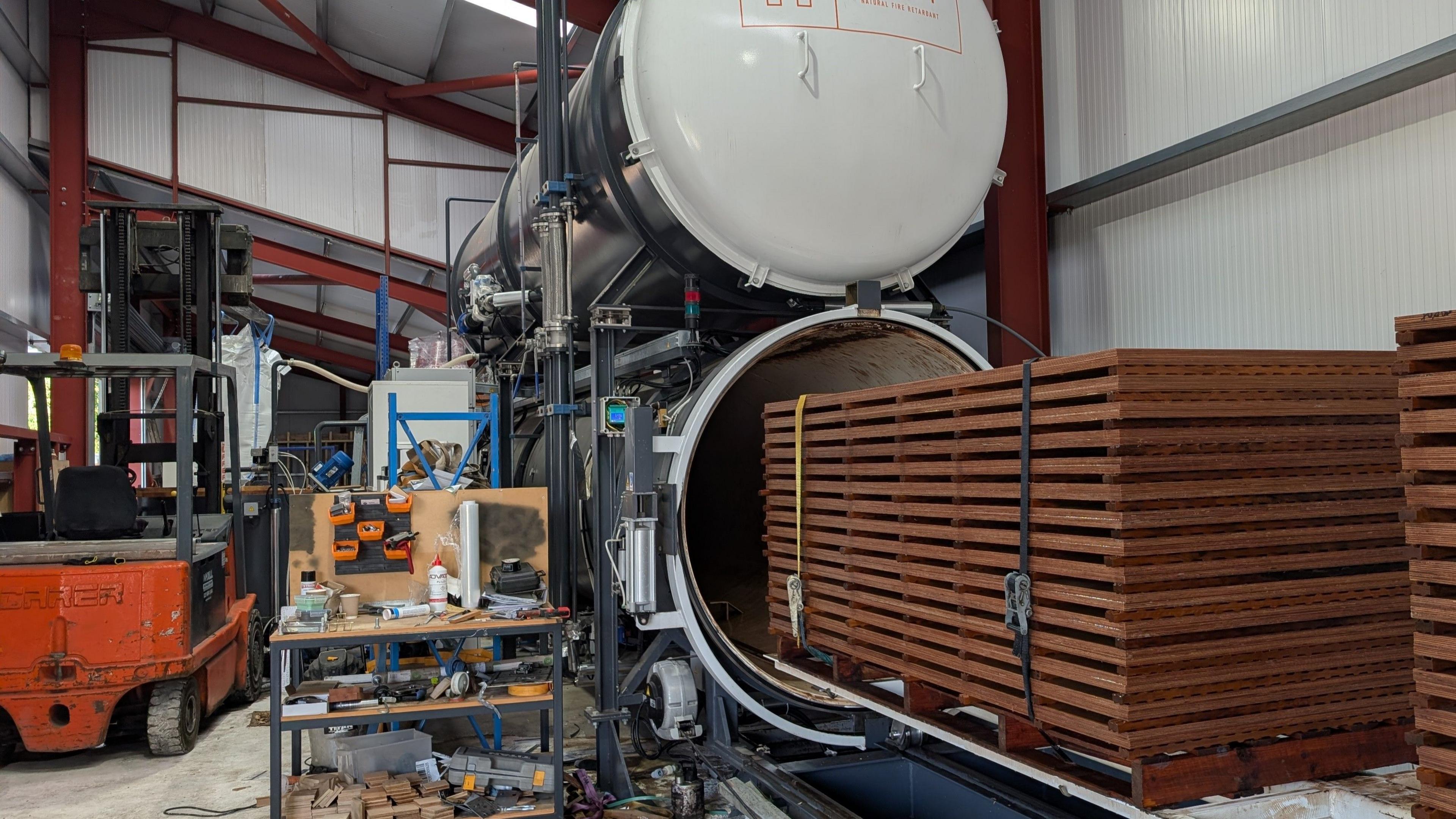
The treatment process involves placing timber inside an autoclave, where a vacuum opens the wood pores, followed by injecting the flame-retardant fluid under pressure. The timber is then kiln-dried for 10 days to six weeks to ensure the retardant penetrates the wood's core.
Experts caution regarding flame retardants, recalling a history of toxic substances used in the past. There is general skepticism about new treatments, noting that earlier approaches such as clay nanocomposites have largely faded over the decades.
In addition to timber treatments, fire safety research is advancing in plastics. First Graphene's PureGRAPH graphene additive is claimed to slow fire spread by forming a gas barrier and char layer. Although health data on PureGRAPH remains pending, Vector Homes intends to license the additive for use in construction materials.
Broader innovations in fire prevention include research from Stanford's Eric Appel, who is developing gel-like retardants that can be sprayed onto homes before wildfires. These gels transform into protective aerogels when exposed to flames and are currently being tested on mock-up structures.
These developments collectively represent ongoing efforts to improve fire safety by enhancing material resistance, though experts maintain a cautious outlook toward new solutions.