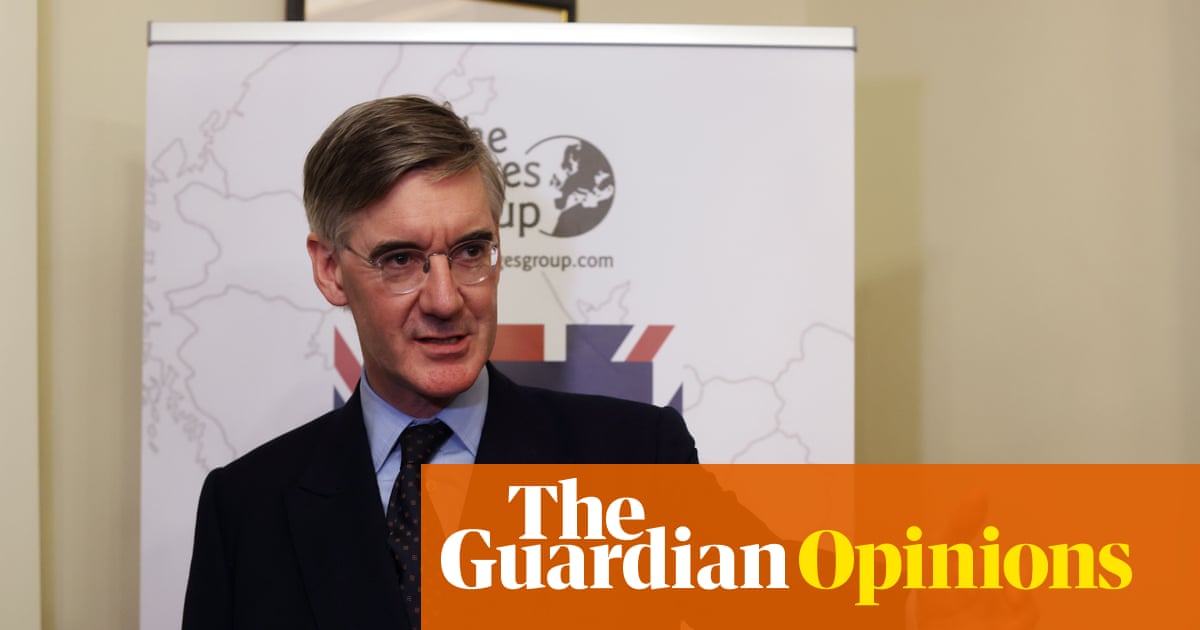
Jacob Rees-Mogg Hosts Bruges Group to Launch '75 Brexit Benefits' Amid Shifting Public Opinion and Labour's Stance
A gathering of the Bruges Group took place at Jacob Rees-Mogg's Westminster townhouse where they launched the book '75 Brexit Benefits'. Attendees included prominent Brexit supporters such as Iain Duncan Smith, Bill Cash, and John Redwood.
During the event, Rees-Mogg framed the Labour Party's position by referencing recent remarks from Keir Starmer suggesting that re-entering the EU could help fix the economy. Several Labour figures acknowledged the economic harm caused by Brexit. Rachel Reeves highlighted cuts to capital spending, Wes Streeting called for undoing the economic damage, and David Lammy expressed openness to closer integration with Brussels while stopping short of endorsing rejoining the customs union.
Public opinion appears to be shifting, with a recent poll indicating that 56% of people now view Brexit as a calamity compared to 31%. Economic analyses back this view, with researchers Springford and Sissons pointing to Brexit's negative impact on trade. Furthermore, estimates from the National Bureau of Economic Research suggest a 6-8% loss in GDP so far, equating to approximately £240 billion in lost wealth and £90 billion in annual tax revenue.
The debate on the post-Brexit models remains active, with Switzerland and Norway cited as alternative arrangements. However, these models come with costs such as the loss of free movement and higher fees.
Media coverage reveals contrasting portrayals. Right-leaning outlets tend to depict Labour as seeking to unravel Brexit, yet public sentiment and the political discourse indicate a move away from pro-Brexit narratives.
The book '75 Brexit Benefits' is described as containing a mix of accurate points, like improved animal protection standards, and disputed claims, such as the impact on motor insurance costs. Notably, it omits mention of significant losses to the Treasury.
This event and the accompanying discourse are portrayed as a turning point in Labour's approach and the broader national conversation on Brexit, with the Rees-Mogg salon symbolizing unease within the Brexit-supporting right.