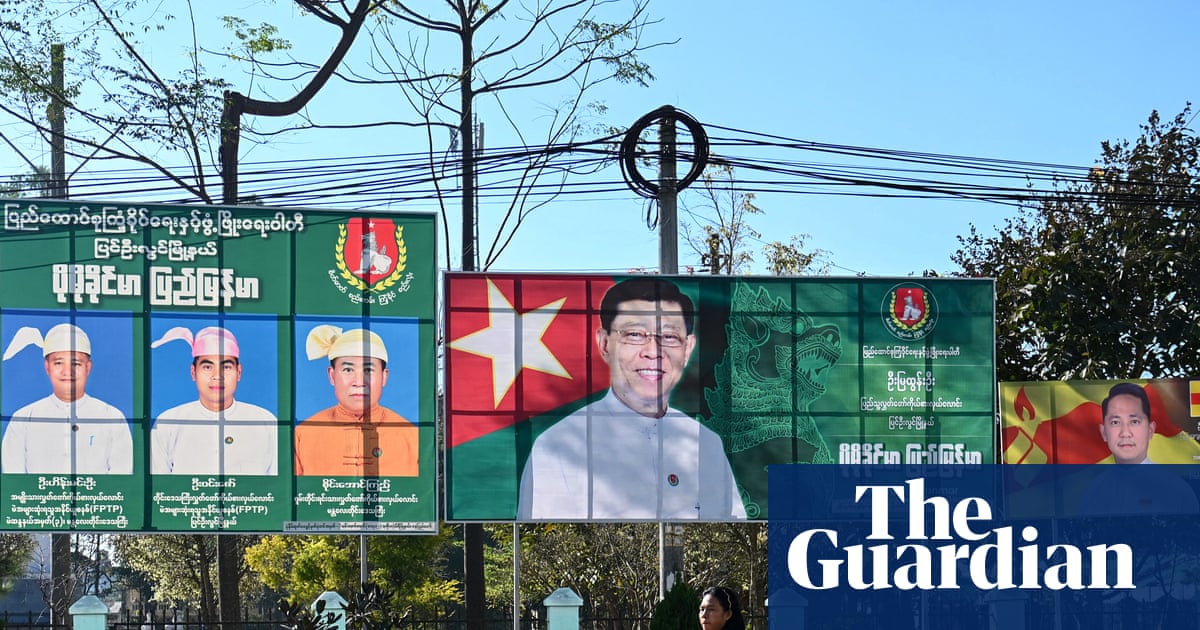
Myanmar Junta Prepares Controversial 2025 Election to Legitimize Power
Myanmar is set to hold its first election since the 2021 coup, with polling scheduled in three phases on 28 December 2025. The election is widely regarded as an attempt by the military junta to legitimize its power. Key opposition parties have been dissolved; notably, the National League for Democracy no longer exists, and 57% of the parties that participated in the 2020 elections have been disbanded. Only six parties are running nationwide, with the military-backed Union Solidarity and Development Party (USDP) fielding many candidates.
Significant portions of the country are excluded from voting. Authorities have canceled elections in 56 of 330 townships, and about 3,000 wards and village tracts will not receive ballots, resulting in roughly one-third of the nation being unable to participate. An election-protection law criminalizes criticism of the vote, and since July 2025, more than 200 individuals have been arrested for criticizing the election or related posts. Meanwhile, authorities are conducting door-to-door voter mobilization campaigns in urban areas such as Yangon.
The junta claims the vote is designed for the benefit of the people rather than the international community. However, Western governments and the United Nations have dismissed the election as a sham. In contrast, China has publicly supported the election, calling it a path toward stability. This backing has enabled the military regime to cut cross-border supplies to opposition forces, with groups like the Ta'ang National Liberation Army (TNLA) and the Myanmar National Democratic Alliance Army (MNDAA) reportedly returning territory to the junta. Analysts warn that any ceasefires following the election are likely to be tactical rather than lasting.
On the ground, conflict and security have deteriorated. Military air and drone strikes have increased by approximately 30% in 2025 compared to 2024. Notably, a hospital in Rakhine State was struck, and conscription-related abductions have risen by 26%, leaving much of the territory contested and unstable.