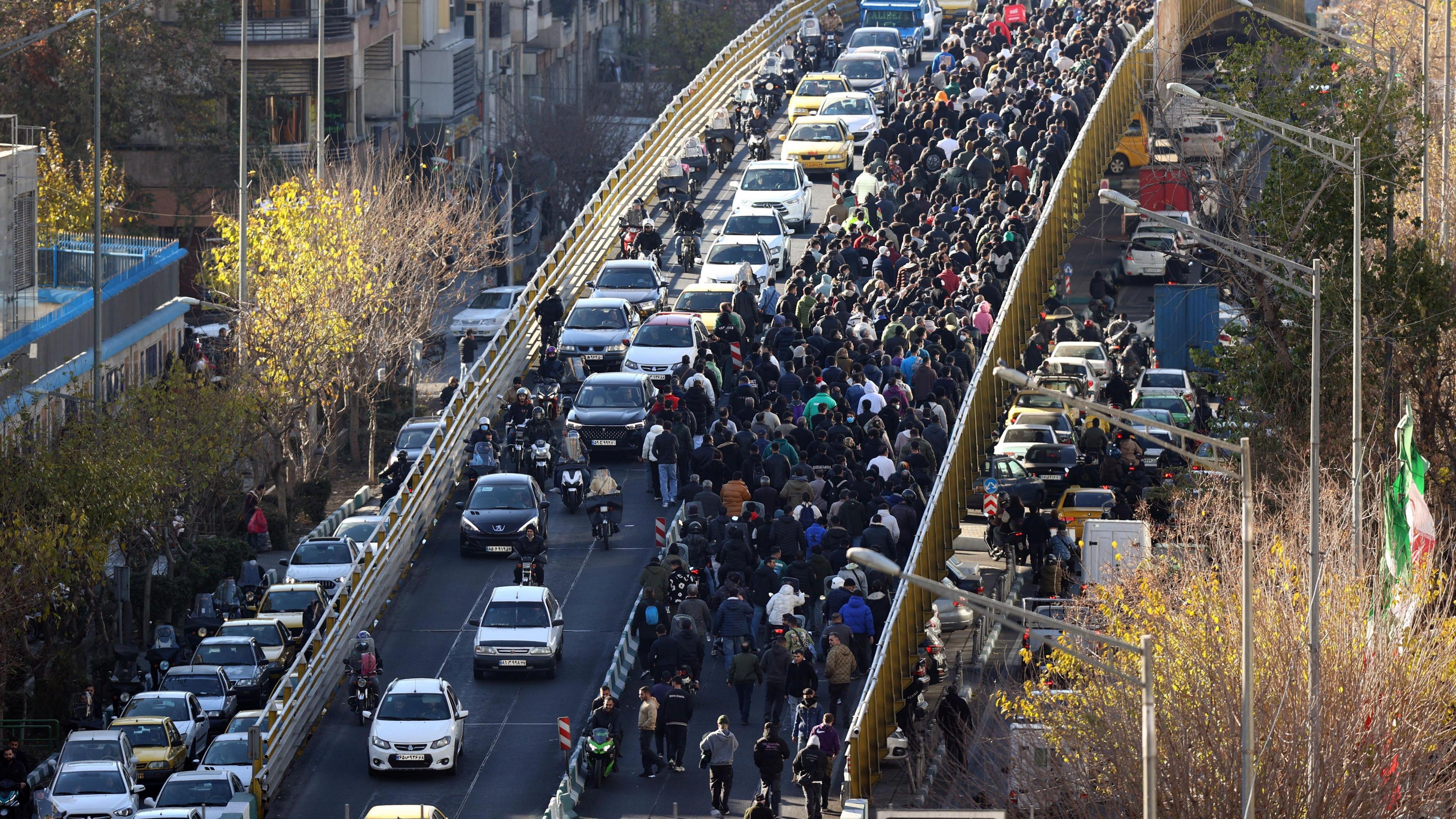
Protests and Strikes Spread Across Iran Amid Economic Turmoil
Protests and strikes in Iran have entered a third day, initially sparked by inflation and the rial’s record low against the dollar, beginning with Tehran’s Grand Bazaar. Demonstrations have since expanded to multiple cities including Karaj, Hamedan, Qeshm, Malard, Isfahan, Kermanshah, Shiraz, and Yazd. Police have used tear gas to disperse protesters in several locations.
The government has acknowledged the protests and stated it will listen with patience. The interior minister has been ordered to hold talks with protest representatives to address their concerns. Amidst the unrest, Central Bank governor Mohammadreza Farzin resigned and was replaced by Abdolnasser Hemmati.
University students have joined the protests, chanting anti-government slogans such as 'Death to the dictator' targeting Supreme Leader Ayatollah Ali Khamenei, and some chanting 'Long live the Shah' in support of the Shah’s son. Reza Pahlavi, exiled in the United States, expressed support for the protesters, describing their cause as just and predicting their victory.
The US State Department's Persian-language X account also expressed support, praising the protesters’ courage and dignity. This unrest unfolds in a broader geopolitical context, including a recent meeting in Florida between President Trump and Prime Minister Netanyahu and Trump's comments about Iran’s economy. Iran maintains its nuclear programme is peaceful.
President Masoud Pezeshkian warned of a severe response to any oppressive acts. Meanwhile, Ayatollah Ali Khamenei stated that enemies wanted to foment sedition but asserted that the people were not influenced by these external forces.