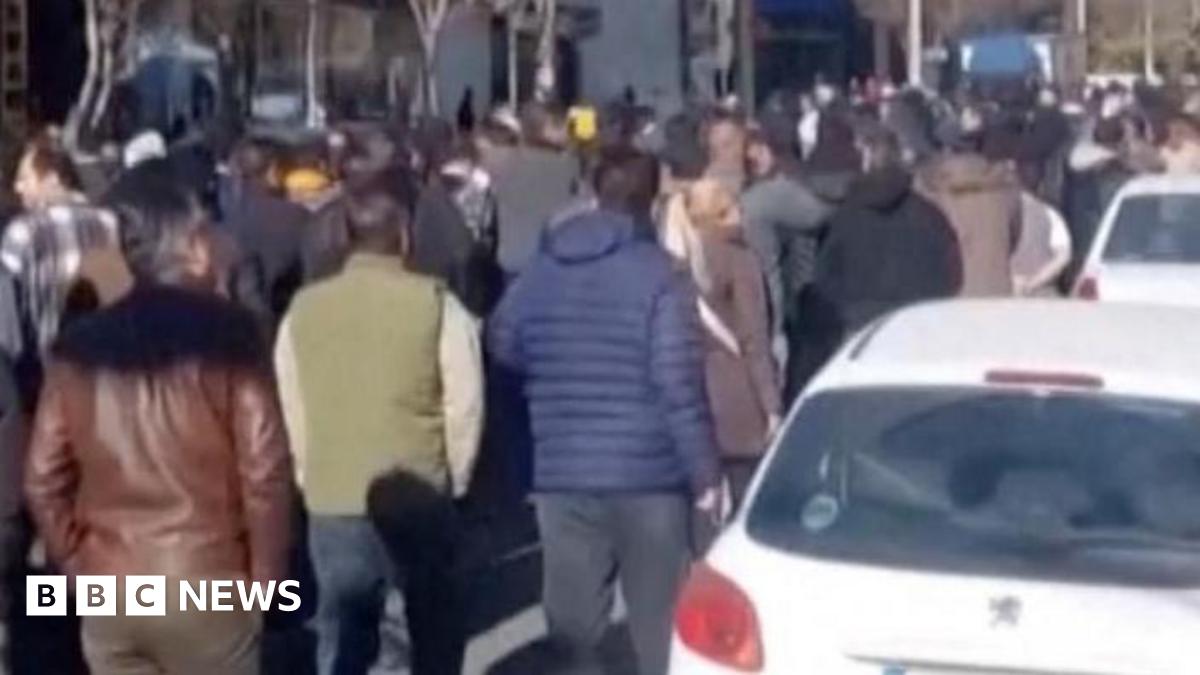
Protests Erupt Across Iran Amid Economic Hardship; Calls for End of Clerical Rule
At least six people were killed on Thursday amid widespread protests across Iran, marking the largest unrest since the 2022 uprising triggered by Mahsa Amini's death. The casualties were reported in several cities: two in Lordegan, three in Azna, and one in Kouhdasht. Human rights group Hengaw confirmed two of the Lordegan victims were protesters, though other deaths noted by Fars News Agency could not be independently verified by the BBC.
The protests began on Sunday in Tehran following the rial's sharp decline in value, quickly spreading to other cities including Lordegan, Tehran, and Marvdasht. Demonstrators have chanted anti-government slogans, some calling for the end of Supreme Leader Khamenei's rule, while others advocate for the restoration of monarchy.
Clashes between protesters and security forces were captured in footage showing cars set on fire. Iranian authorities have responded with warnings and cautious engagement; Prosecutor-General Mohammad Movahedi-Azad promised a decisive response to the unrest, while President Masoud Pezeshkian stated he would listen to legitimate demands.
In the backdrop of US-Iran tensions, US former President Trump warned Iran's authorities against killing peaceful protesters in a post on Truth Social, employing locked-and-loaded language and pledging US intervention if necessary. Ali Larijani, adviser to Supreme Leader Khamenei, cautioned that US interference could destabilize the region and urged Trump to exercise care.
The escalating tensions follow US strikes on Iran's nuclear sites in June, ordered by Trump, which Iran retaliated against with a missile attack on a US base in Qatar. US officials claim these strikes delayed Iran's nuclear progress, a claim Iran disputes.
The ongoing protests represent the widest dissent against Iran's clerical rulers since last year's uprising, highlighting growing discontent amid economic struggles and political grievances.