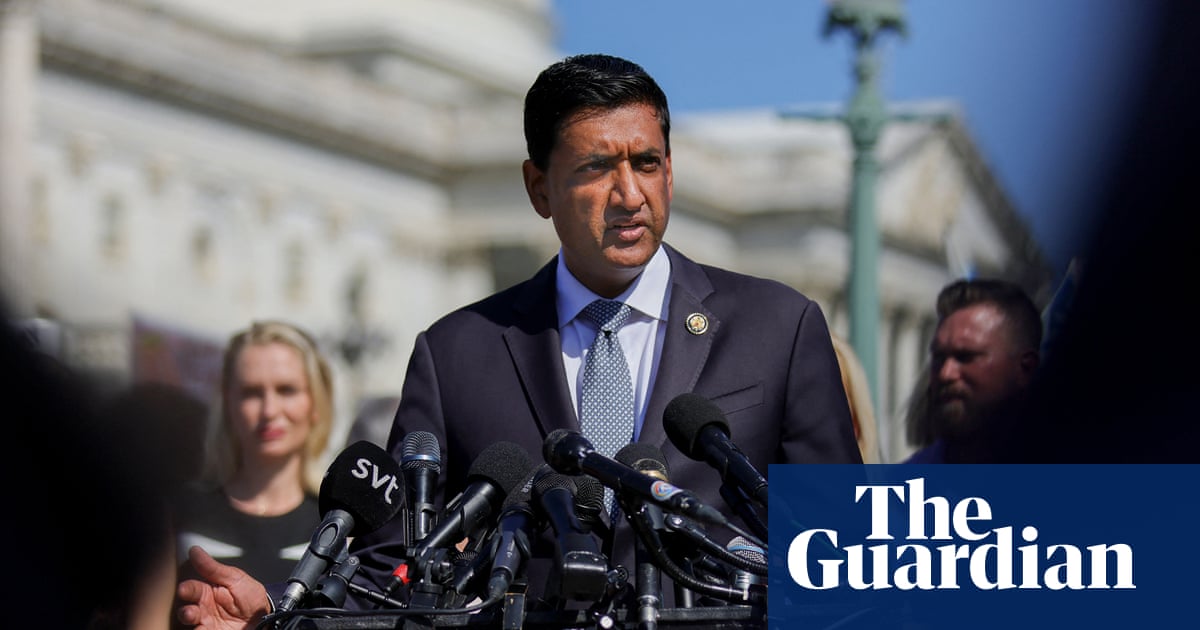
Ro Khanna's Bipartisan Epstein Files Transparency Act Forces DOJ to Release Sealed Documents
The Epstein Files Transparency Act, introduced by Congressman Ro Khanna, compelled the Department of Justice to release sealed documents and grand jury materials related to Jeffrey Epstein and Ghislaine Maxwell. A deadline of 19 December was set, and the act progressed rapidly from concept to passage within five months.
By the deadline, three federal judges had ordered the release of previously sealed grand jury testimony. Consequently, the DOJ unveiled thousands of new files, connections, and photographs revealing Epstein’s extensive network. Khanna refers to the newly released material as the 'Epstein class,' which exposes wealthy and powerful individuals linked to Epstein’s sex-trafficking operation. The act aims to hold these elites accountable.
This legislation is part of Khanna’s broader bipartisan record, which includes the 2019 Yemen War Powers Resolution and the 2022 Chips and Science Act. Khanna successfully built a cross-partisan coalition that included Republicans such as Thomas Massie, Rand Paul, Mike Lee, and Mark Meadows. Massie noted that just one Republican vote in the Rules Committee could unlock additional support. Past collaborations provided effective 'muscle memory' that helped accelerate the Epstein Files Transparency Act. Long-standing alliances on foreign policy were integral to this progress.
Khanna highlighted the strategic importance of mastering institutional rules and cultivating trusted relationships with a small group of Republicans to advance legislation. Leadership support from figures like Hakeem Jeffries and Gideon Bragin was also crucial. The Chips and Science Act, passed in 2022 after a two-year effort starting in 2020 with Mike Gallagher, Todd Young, and Chuck Schumer, notably boosted domestic semiconductor manufacturing with new factories in Ohio and Arizona.
Khanna outlined his vision for a 'modern FDR coalition' built on three pillars: good jobs at home, no endless wars abroad, and accountability for elites. This coalition seeks to unite progressive voters with disaffected Maga voters beyond centrist policies. While acknowledging that bills often face long odds—about 5% at the outset—Khanna emphasized repeated bipartisan successes. He is currently pursuing a bipartisan war-powers resolution aimed at preventing regime change in Venezuela.