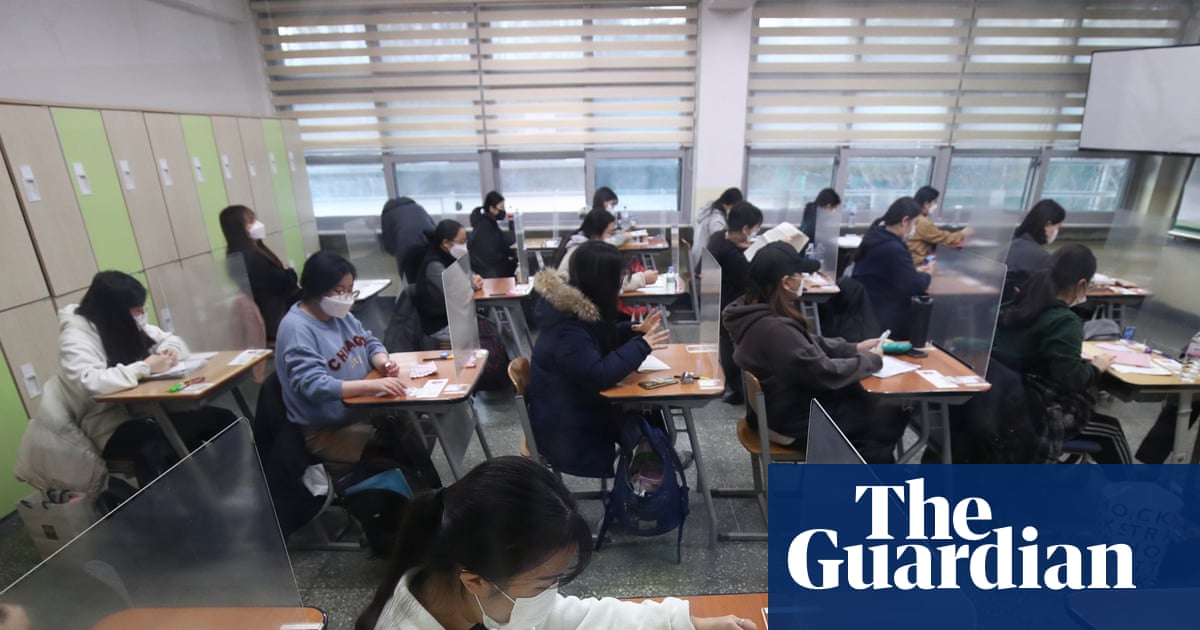
South Korea Exam Chief Resigns After Controversy Over Difficult English Test
Oh Seung-keol, chief of Korea’s Institute for Curriculum and Evaluation, resigned following widespread criticism that the English section of the Suneung exam was excessively difficult. The Suneung is a critical test for admission to South Korea's top universities and is widely seen as a crucial gateway to social mobility, economic security, and even marriage.
Only just over 3% of test-takers scored top marks in the English section—the lowest since absolute grading was introduced in 2018. The test allowed 70 minutes for 45 questions, which included challenging topics such as Kant and Hobbes and the rule of law, the nature of time and clocks, and the concept of existence as it relates to video game avatars. Notably, flights nationwide were grounded for 35 minutes during the English listening test to eliminate noise.
Oh Seung-keol apologized for causing concern among test-takers and parents, and for issues in the exam process. The institute stated that his resignation reflected acceptance of responsibility and a misalignment with the principles of absolute evaluation. The testing agency also issued a separate apology for failing to set an appropriate difficulty level and for not adequately reducing students’ academic burden.
Additionally, the use of the portmanteau 'culturtainment' in the test caused confusion among students and drew criticism from an academic observer. The ultra-competitive education system in South Korea contributes to high levels of teenage depression and suicide risk. In response to these concerns, the National Assembly approved an amended law banning private English-language institutes from administering entrance tests to preschoolers.
Separately, it was reported that a nephew of a Samsung Electronics chief failed one question on the exam but still gained admission to Seoul National University.