The Guardian View on Adapting to the Climate Crisis: It Demands Political Honesty About Extreme Weather
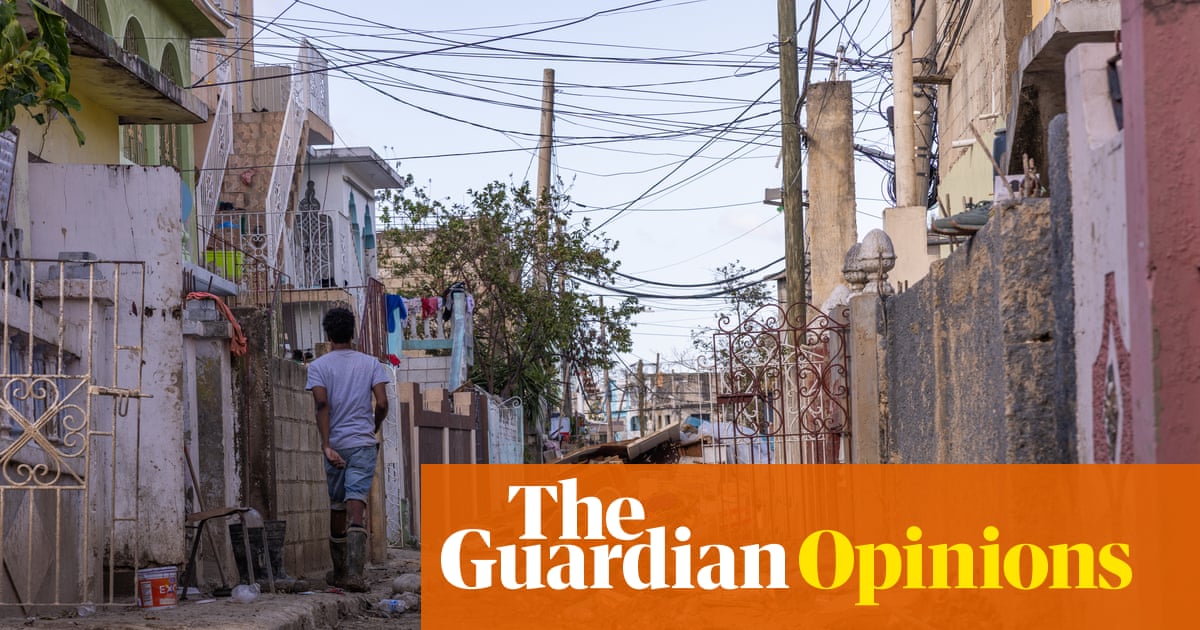
Hurricane Melissa at the end of October 2025 caused winds of 252 mph in the Caribbean, with attribution science confirming that the climate crisis made such an event five times more likely.
The summer wildfires in Spain and Portugal were found to be 40 times more likely due to global warming, while England's June heatwave was made 100 times more likely by rising temperatures.
Overall, attribution science is increasingly linking global heating to extreme weather, which drives record heatwaves and more violent storms with increasing frequency.
At COP30 in Belém, the outcome included tripling the adaptation budget to $120 billion, with the deadline for spending moved to 2035; however, there remains no clear mechanism to compel wealthy countries to pay, and total climate finance is still below the COP29 target of $300 billion.
There is a significant risk to indebted countries like Jamaica if adaptation funds prove insufficient, as this forces them to divert resources from green energy projects and future-proofing measures to immediate disaster response.
In response, UK scientists held a national emergency briefing in London to warn about the scale of the climate crisis and the nation's underpreparedness.
Adaptation to climate change requires strong state action and public finance, as private finance is retreating from long-term, low-profit investments.
The risk posed by climate change equates to everyday injustice and is fundamentally a political battle, a point highlighted by Leah Aronowsky.
UK policy signals include the Climate Change Act, which obliges the government to prepare and regularly review adaptation plans, and tasks the Climate Change Committee with outlining a well-adapted country.
Plans are underway to build 1.5 million homes in England, and National Adaptation Plans should be given prominence alongside efforts to decarbonise the economy.