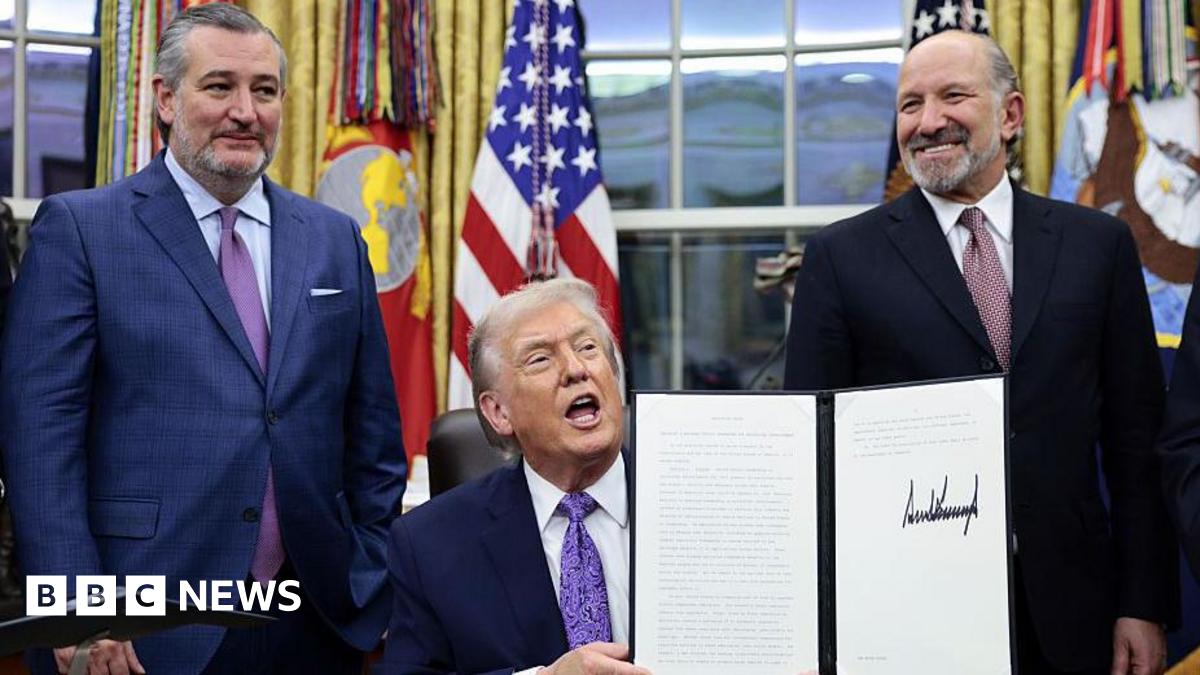
Trump Signs Executive Order to Establish Federal AI Guidelines Amid State-Level Regulatory Variations
Former President Donald Trump signed an executive order intended to pre-empt individual state AI regulations by establishing a uniform federal standard. This move aims to empower the administration to counteract burdensome state rules, while not opposing AI regulations designed to protect children’s safety.
Currently, the United States lacks a national AI law. Over 1,000 AI-related bills have been introduced at the state level; in 2023 alone, 38 states enacted around 100 AI regulations. For example, California requires chatbot disclosures and mandates large AI developers to outline strategies to mitigate catastrophic risks. Other states have enacted varied rules, such as North Dakota banning AI-powered robots from stalking or harassment, Arkansas prohibiting AI-generated content from infringing intellectual property or copyrights, and Oregon preventing non-human AI entities from using licensed medical titles.
Critics of the order argue that federal guardrails are necessary to avoid a fragmented patchwork of state laws that could weaken protections for residents. California Governor Gavin Newsom criticized the order, calling it a concession to technology interests that undermines needed safeguards for Americans against unregulated AI.
Responses from major AI companies like OpenAI, Google, Meta, and Anthropic were not available. However, NetChoice, an industry group, praised the executive order and encouraged the development of nationwide AI standards. Legal expert Michael Goodyear from New York Law School noted that a single, well-designed federal law would be preferable to inconsistent state regulations, but cautioned that poor design could create additional problems.