U.S. Forces Capture Venezuelan President Nicolás Maduro, Global Reactions and Implications
On January 3, 2026, U.S. military forces captured Venezuelan President Nicolás Maduro and his wife as part of Operation Absolute Resolve. Former President Trump announced that Maduro and his wife were flown out of Venezuela and detained aboard the USS Iwo Jima. This action echoed the authorized but debated 1989–1990 Panama invasion, Operation Just Cause, which targeted Manuel Noriega on drug-trafficking charges and employed psychological warfare including blasting rock music to force surrender. The Noriega operation resulted in numerous casualties on all sides and Noriega was ultimately convicted and sentenced before his death in 2017.
In the months prior to Maduro's capture, the U.S. had conducted strikes on suspected drug vessels linked to the Venezuelan regime in the Caribbean Sea and Eastern Pacific. Trump stated the United States would manage Venezuela temporarily until a safe and proper transition could be achieved.
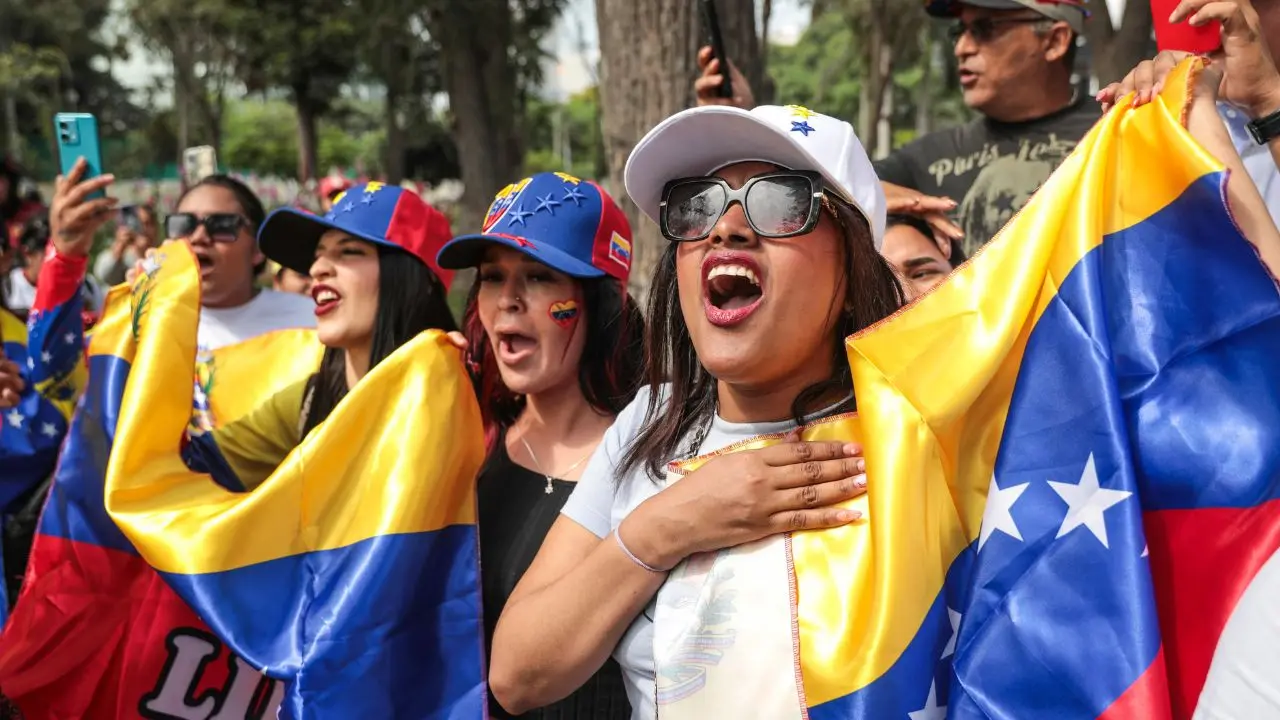
Celebrations erupted worldwide among the Venezuelan diaspora, with large gatherings in Miami, Doral, Palm Beach, Santiago, Lima, Ecuador, and Madrid. Crowds wore Venezuela’s national colors, waved flags, and carried signs proclaiming “Libertad” and “Somos Libres.” Since 2017, about 8 million Venezuelans have fled the country, with roughly 6.9 million hosted in Latin America and the Caribbean, and hundreds of thousands in the U.S. and Europe. Meanwhile, protests both supporting and opposing the strikes were planned in Buenos Aires and other cities globally, including a demonstration by the Greek Communist Party.
Regarding Maduro’s succession, reports indicated Venezuelan Vice President Delcy Rodríguez might be in Russia, although Russia’s foreign ministry denied this. Rodríguez had demanded proof of life for Maduro after his capture was announced. Jorge Rodríguez, head of Venezuela’s National Assembly and Delcy's brother, reportedly remained in Caracas. Experts have named opposition figures María Corina Machado, the 2025 Nobel Peace Prize winner, and Edmundo González as likely successors. Trump indicated a leadership decision was underway with U.S. involvement in Venezuela’s transition.
International responses varied significantly. UK Prime Minister Keir Starmer declared no tears for Maduro’s end and called for a peaceful transition reflecting the Venezuelan people’s will. China strongly condemned the use of force against a sovereign country, while Russia accused the U.S. of armed aggression and Iran labeled the strikes a flagrant sovereignty violation. Latin American leaders, including Lula da Silva, Gustavo Petro, Miguel Díaz-Canel, Gabriel Boric, and the Uruguayan government, condemned or expressed concern about the military action, describing it as crossing an unacceptable line or criminal.
Meanwhile, U.S. Senator Marco Rubio criticized Cuban leadership for supporting Maduro, and Trump suggested Cuba could be part of broader regional policy.
European Union officials urged respect for international law and a peaceful transition. German official Merz noted the operation’s legality as complex, and French President Macron expressed hope that the opposition candidate would ensure stability. UN Secretary-General Antonio Guterres voiced deep concern over the apparent disregard for international law, calling for inclusive dialogue, human rights respect, and rule of law.
Back in the U.S., some domestic voices, including Senate Minority Leader Chuck Schumer, criticized the operation for lacking congressional approval. Maduro and his wife have been indicted in New York on drug charges, underscoring the international legal dimension of the development.