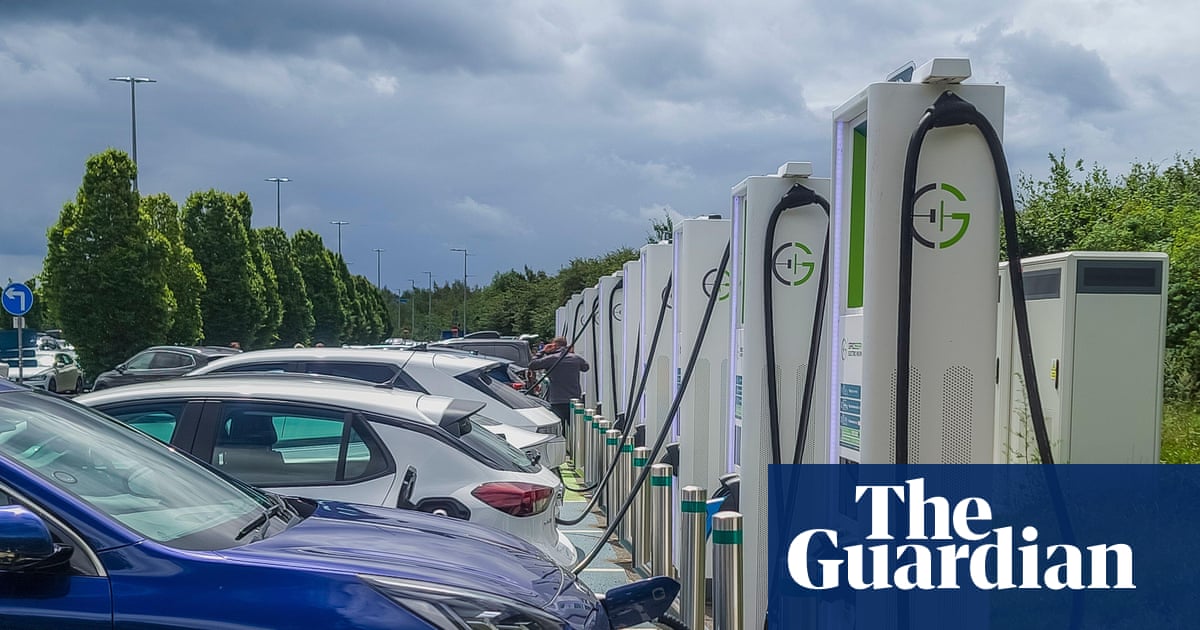
UK Electric Car Charger Installations Slow Amid Mixed Policy Signals and Regional Disparities in 2025
By the end of November 2025, the UK had installed a total of 87,200 electric car chargers, marking an increase of 13,500 chargers from the end of 2024, according to data from Zapmap. However, 2025 saw the smallest number of new charger installations since 2022, with annual growth projected to fall below 20%, down from 37% in 2024.
Electric vehicle (EV) sales comprised 23% of UK car sales during the first 11 months of 2025, an increase from 19% the previous year. Despite this growth, the pace is slower than expected as some car manufacturers have slowed EV adoption and investors have become more cautious about funding charging infrastructure.
Pressure from carmakers led the UK government to dilute electric car sales targets, and a 3p-per-mile tax on EVs starting in 2028 was announced. These policy changes may undermine both confidence and investment in the transition to electric vehicles.
Regarding charger types, by the end of November 2025, there were 48,100 slow chargers (up 15% year-on-year) and approximately 9,800 ultra-rapid chargers (up 39%). Industry experts and analysts have cited several factors slowing the rollout of new chargers, including mixed government messaging, rising costs, and bottlenecks in grid connections. Additionally, local EV infrastructure funding from Levi has been delayed but is expected to be provided in bulk to councils in 2026 and 2027, potentially accelerating future installations.
There is significant regional variation in charger availability. Northern Ireland had 39 public chargers per 100,000 people, while London had 301 per 100,000. Northern Ireland, East Midlands, and northeast England were the slowest regions in charger installations per capita through October 2025.
Cenex, an industry body, observed that public charging supply across Great Britain remains about 1.5 years ahead of demand. Existing rapid chargers on motorways are estimated to suffice for another six years without requiring significant new installations.