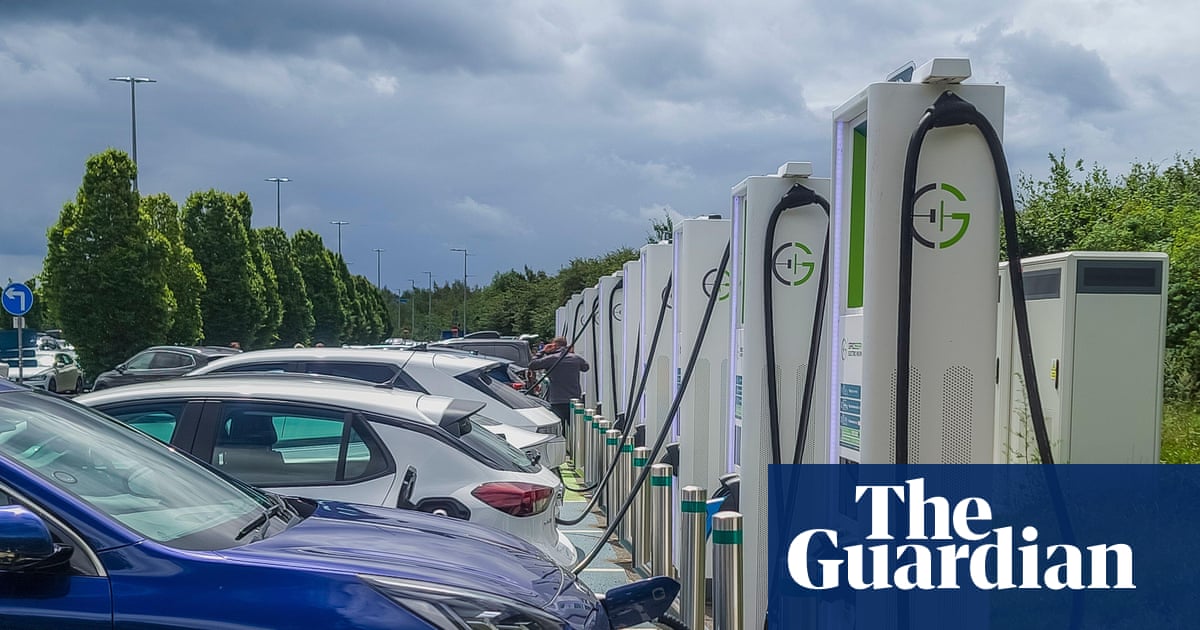
UK Electric Vehicle Charging Infrastructure Growth Slows Amid Market and Policy Challenges
By the end of November 2025, the UK had 87,200 public electric vehicle (EV) chargers, an increase of 13,500 from the end of 2024. This marks the slowest pace of new installations since 2022, with annual growth expected to be under 20%, down from 37% the previous year.
Electric vehicles accounted for 23% of new car sales in the first 11 months of 2025, up from 19% in the previous year. However, this growth is slower than analysts had anticipated. Carmakers influenced the government to weaken electric car sales targets, raising concerns in the charging sector that lower sales could deter further investment.
From 2028, a 3p-per-mile pay-per-mile tax for EVs is planned, as announced in the budget. This policy could undermine consumer confidence in EV usage. Furthermore, Levi (Local Electric Vehicle Infrastructure) funding for councils has been delayed but is expected to accelerate charging installations between 2026 and 2027. Industry representatives are calling for government support to reduce costs and address grid connection bottlenecks.
Regarding charger types, approximately 48,100 slow chargers were available at end-November 2025, up about 15% year-on-year, and around 9,800 ultra-rapid chargers, up approximately 39%. This reflects growth in both categories, although deployment remains uneven.
Regional disparities remain significant. Northern Ireland has 39 public chargers per 100,000 people compared to London's 301. The East Midlands and northeast England are among the slowest in charger availability per person. According to Cenex, Great Britain's public charging infrastructure is about 1.5 years ahead of demand, with rapid-charger networks strongest on long-distance routes.
Authorities and industry stakeholders cite rising costs and grid-connection bottlenecks as major constraints to infrastructure rollout. Mixed government messaging is also seen as a headwind for EV sales and investment in charging infrastructure.