US Accelerates Efforts to Reduce Dependence on Chinese Rare-Earth Minerals
The White House has prioritized domestic rare-earth mining and processing to end the United States' reliance on China, using tariffs and other policy tools.
Scott Bessent highlighted progress by presenting a rare-earth magnet and referencing eVAC’s new processing center in South Carolina, claiming steps toward breaking China's chokehold.
China currently dominates the rare-earth sector, accounting for about 70% of global mining and over 90% of processing; in 2024, the US imported 80% of its rare-earth usage.
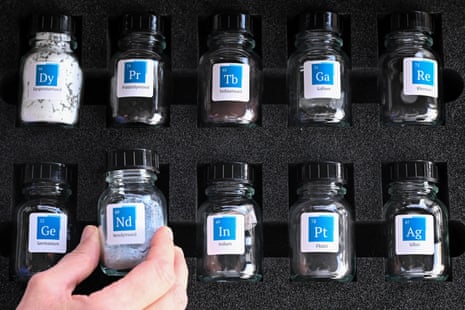
Critical elements like dysprosium and samarium depend about 99% on Chinese refinement, revealing vulnerabilities in magnets essential for electric vehicles, wind turbines, and military applications.
Efforts to reach self-sufficiency are ongoing and expected to take years, hindered by lengthy Chinese export licenses and existing gaps in US mining and refining capacity.
Major US assets include the Mountain Pass mine in California, operated by MP Materials, where the Pentagon became the largest shareholder in July and plans a tenfold expansion into a mine-to-magnet plant supporting F-35 jets, drones, and submarines.
North American resource estimates indicate a supply gap: the US holds approximately 3.6 million tons, Canada more than 14 million tons, while China has about 44 million tons, with significant deposits also in Greenland and Brazil.
Federal policy signals include potential direct investments in critical mineral companies, a proposal by Doug Burgum for a sovereign wealth fund to boost production, and an international deal where Pakistan signed a $500 million agreement with US Strategic Metals for access to antimony and copper.