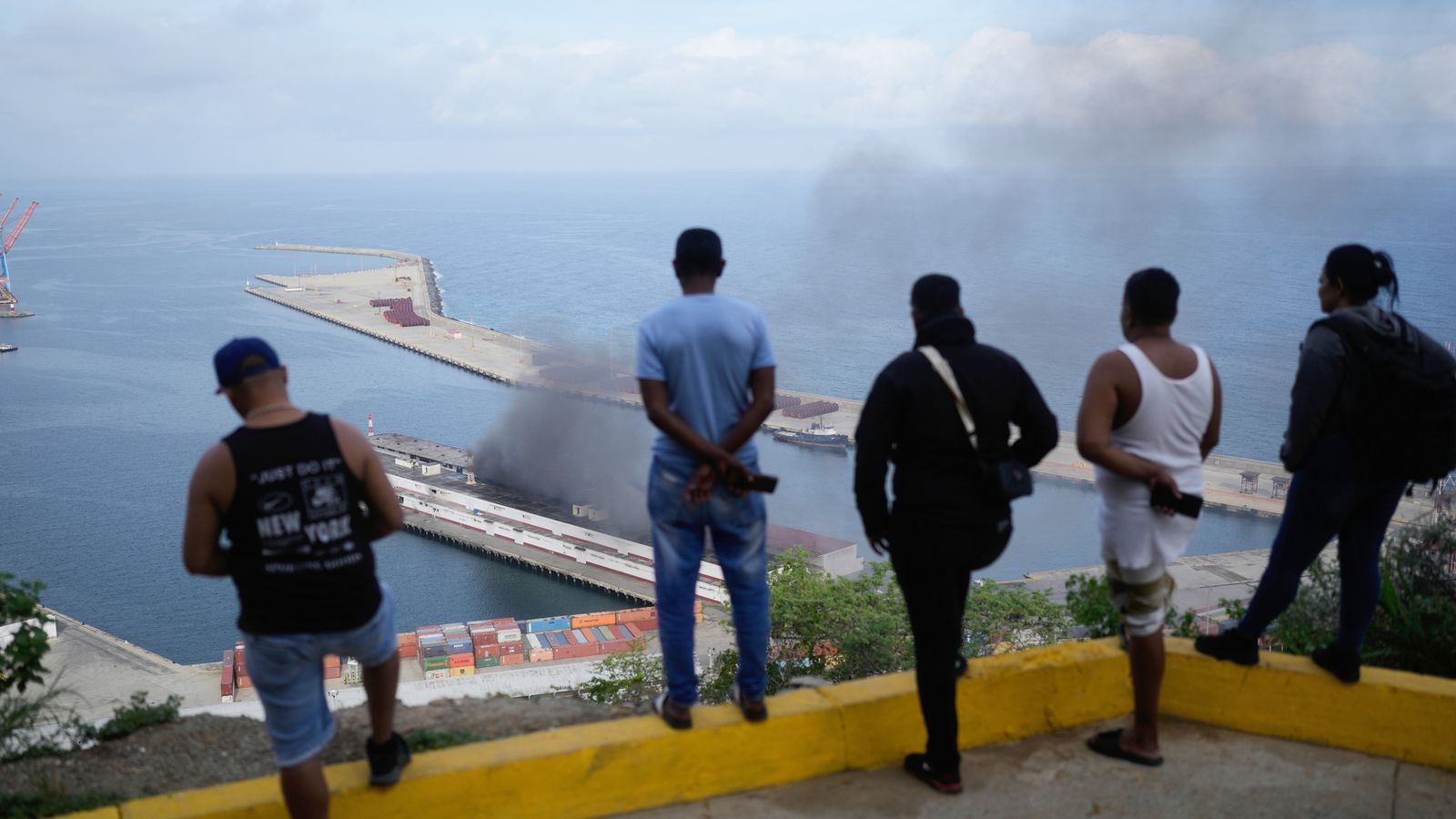
Venezuela Has the World's Largest Oil Reserves But Faces Challenges in Reversing Production Decline
Venezuela holds approximately 300 billion barrels of oil, representing about 17% of global reserves. This exceeds reserves in Saudi Arabia, Iran, and Iraq, and is more than three times the reserves of the United States. Most of Venezuela's oil is extra-heavy crude located in the Orinoco belt, which is viscous and requires specialized refining processes. The United States has refineries capable of processing this type of crude.
Despite the vast reserves, Venezuela's current oil production is under 1 million barrels per day (bpd), significantly down from a peak of around 3.5 million bpd during the 1960s and 1970s. Production declined under President Maduro's administration, with most exported oil shipments directed to China as loan repayments and to the US through Chevron's licensed operations.
Former President Donald Trump stated that US oil companies would invest billions of dollars to reverse Venezuela's production decline following Maduro's ouster, though the timeline for such improvements remains unclear. Raising output is costly; according to consultancy Wood Mackenzie, increasing production by 0.5 million bpd requires approximately $15-20 billion in investment.
A scenario similar to Iraq's post-invasion oil recovery suggests that growth in Venezuelan oil production could eventually happen but would likely take decades, entail significant expenses, and involve considerable instability, making short-term gains improbable. Additionally, near-term oil prices have declined by about 20% in 2025 due to weaker global demand. Market dynamics currently appear more influenced by the Russia-Ukraine conflict than by Venezuelan crude, further dampening prospects for a rapid rebound.
There is ongoing debate about whether US involvement in Venezuelan oil resources constitutes a colonial asset grab or could instead benefit Venezuela economically. This broader question remains unresolved and will require time to assess fully.