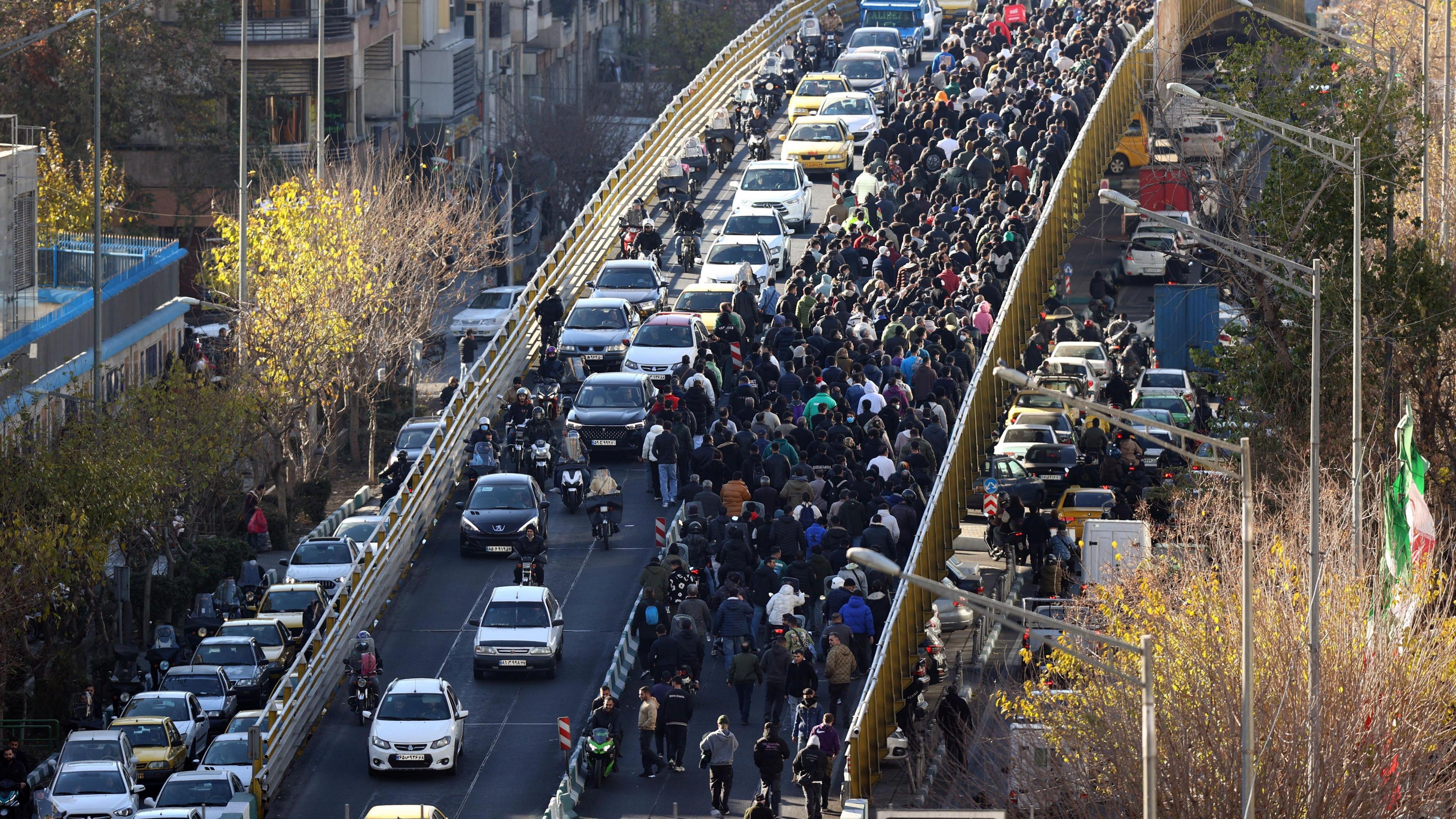
Widespread Protests Erupt Across Iran Amid Rial Devaluation and Inflation
Protests and strikes over inflation and the devaluation of the Iranian rial have spread beyond Tehran to multiple cities including Karaj, Hamedan, Qeshm, Malard, Isfahan, Kermanshah, Shiraz, and Yazd on the third day of unrest. Police deployed tear gas in efforts to disperse demonstrators.
The unrest began after shopkeepers at Tehran's Grand Bazaar staged a strike following the Iranian rial hitting a record low against the US dollar on the open market. University students joined the protests, chanting anti-government slogans, calling against the Supreme Leader, and expressing support for Reza Pahlavi, the late Shah's son.
Reza Pahlavi, who lives in exile in the United States, publicly voiced his support for the demonstrators, highlighting that their cause is just and united against the regime. The US State Department's Persian-language account also expressed support for the protests, praising the demonstrators' courage and dignity.
Amid these events, Iranian authorities acknowledged the protests and indicated willingness to listen patiently. President Masoud Pezeshkian ordered talks with the protesters' representatives and accepted the resignation of the central bank governor, Mohammadreza Farzin, appointing Abdolnasser Hemmati as his replacement.
This unrest occurs alongside broader regional and international commentary, including discussions between US President Donald Trump and Israeli Prime Minister Benjamin Netanyahu in Florida. Trump made remarks regarding Iran's economy and possible future actions. Meanwhile, Iran's President promised that any oppressive act would be met with a severe and regret-inducing response. References were also made to Ayatollah Ali Khamenei’s past statements warning against enemies stirring sedition in the country.